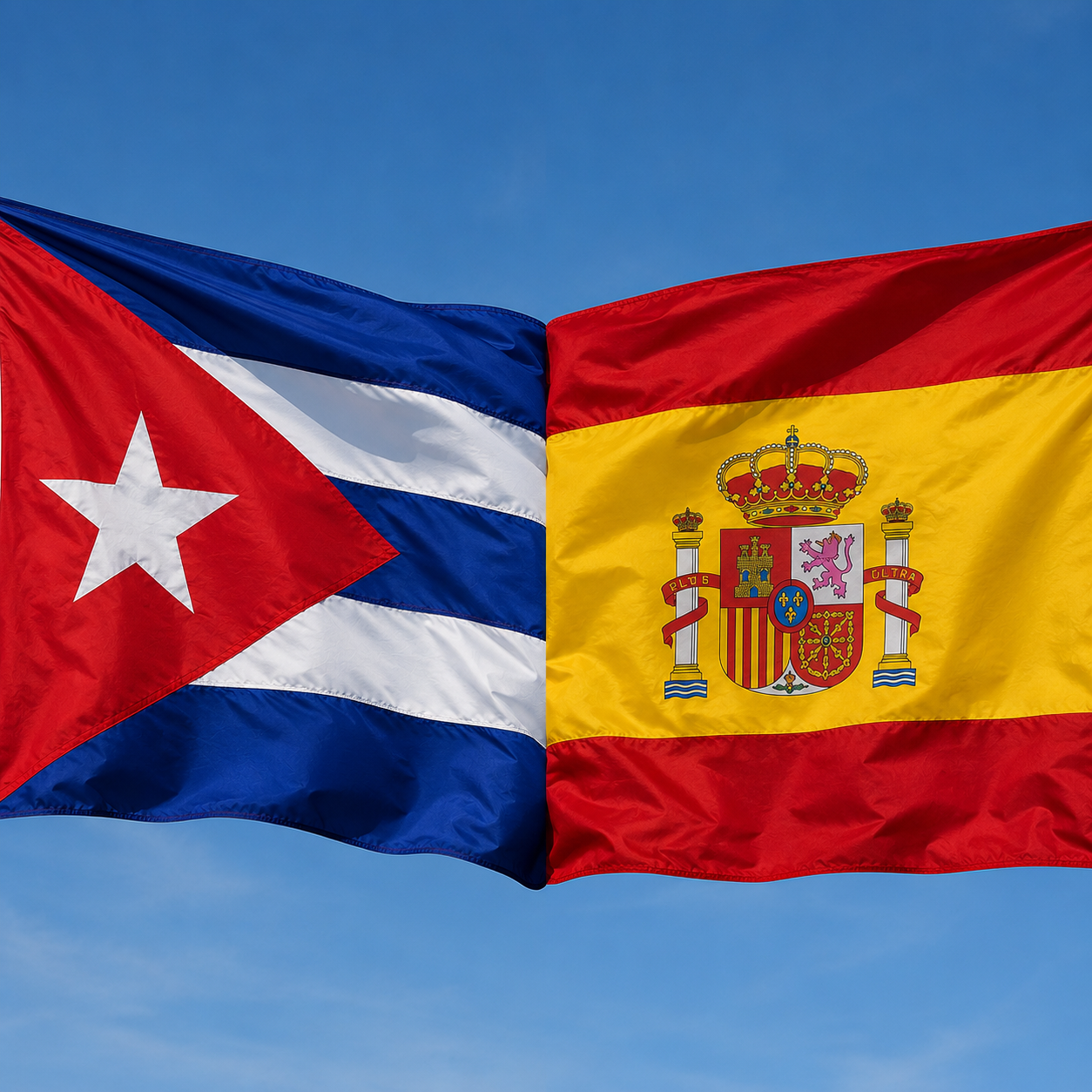
For almost four decades, Spain has maintained a financial relief policy towards Cuba that, according to the report The price of sustaining Castroism, has ultimately turned Madrid into one of the main economic supporters of the regime led by Miguel Díaz-Canel.
According to the authors, successive debt cancellations, credit renegotiations, and cooperation programs have not been accompanied by verifiable improvements in terms of democracy, human rights, or civil liberties.
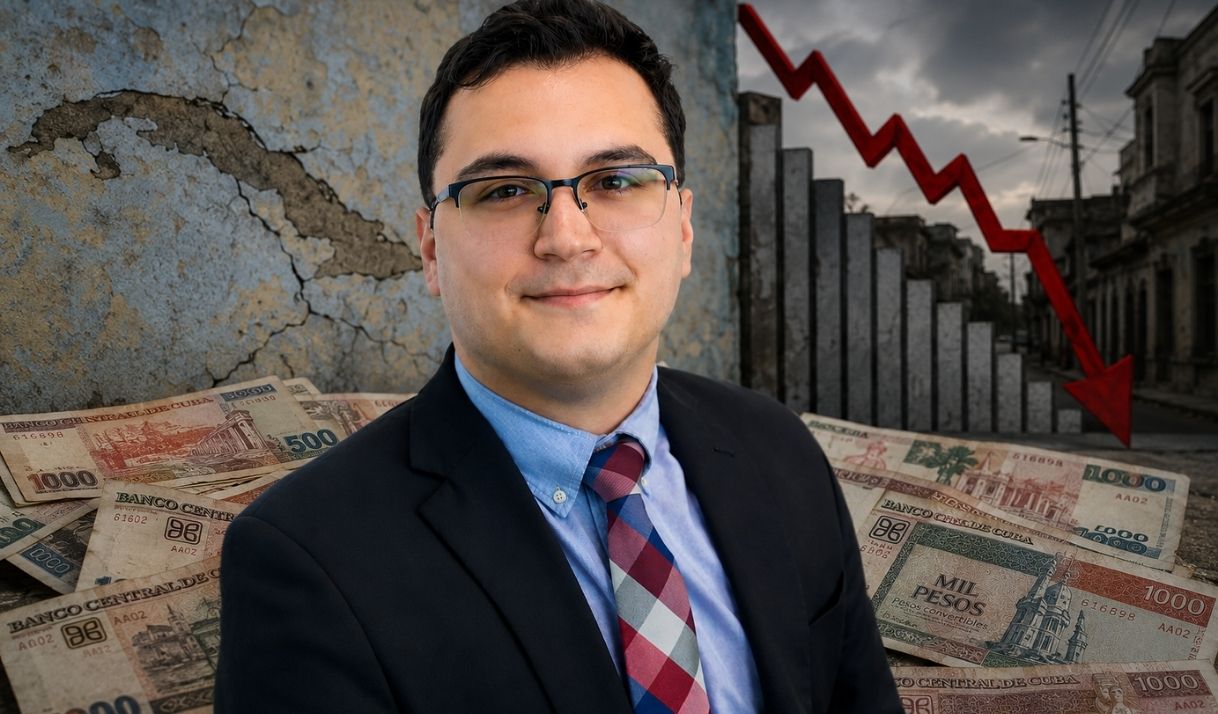
"The most compelling evidence of the financial support that Spain is providing to the Cuban regime is the series of relief, conversion, and debt restructuring measures that have been extended from Madrid to Havana,” said Diego Sánchez de la Cruz, Head of Studies at the Institute, during an interview with ADN Cuba.
The report from the Juan de Mariana Institute published this Thursday reconstructs a timeline that begins in 1986 when Cuba stopped paying its debt to Western countries. After nearly three decades of non-payments, in 2015 the Paris Club approved a write-off of more than 75% of Cuba’s debt, a decision that paved the way for subsequent bilateral agreements with Spain.
More than two billion euros forgiven
One of the main points highlighted in the report refers to the agreement signed in 2016 between the two countries.
Spain then restructured a debt of 2.444 billion euros and forgave 1.492 billion, equivalent to 60% of the indebted amount. The remaining 952 million were refinanced with an eighteen-year payment schedule, conditions particularly favorable for a regime with a long history of defaults.
But the concessions did not stop there.
In 2021, the repayment period was extended, and later, the Spanish government approved a Debt Conversion Program worth 375 million euros, through which these resources would be allocated to finance projects in sectors such as energy, water, and food security within Cuba. Critical sectors on the island, which is currently on the brink of survival.
Additionally, in October 2025, a new financial relief operation valued at 291 million euros was initiated, related to credits granted to Spanish companies operating on the island.
"In 2016, Spain acknowledged approximately 2.5 billion euros of debt that Cuba had outstanding, and today that figure is less than 300 million. This means that out of every 100 euros of debt, only about 10 remain,” explained Sánchez de la Cruz. p>
According to the study, the outcome is that Spain has forgiven nearly 90% of the debt that Cuba owed to the Spanish state, reducing the outstanding balance to around 286 million euros.
The real cost would be much higher
The report in question argues that Spanish financial efforts far exceed official figures. The authors calculate that if Cuba had to finance that debt under normal market conditions, the liability acknowledged in 2016 would have reached 5.280 billion euros by 2026.
Using that methodology, they estimate that the effective economic support granted by Spain would be around 4.994 billion euros, considering both the write-offs and the financial advantages resulting from the refinancing.
The focus inevitably shifts to the situation of Spanish companies with operations in Cuba. Data from the Platform of Affected by Government Non-Payment indicates that more than 150 Spanish companies have outstanding invoices totaling 255 million euros.
If blocked dividends and funds retained by the regime are added, the figure would rise to 318 million euros, affecting even companies that have ended up in bankruptcy proceedings.
This situation reflects a contradiction: while the Spanish state grants financial relief to the Cuban dictatorship, numerous national companies continue to recover resources that remain stuck on the island.
Cooperation goes beyond debt
The research, led by Sánchez de la Cruz, argues that Spanish support is not limited to write-offs.
Among the documented programs are energy cooperation projects, administrative digitization, technical assistance, institutional support, food aid, and even sales of police equipment. It also identifies resources channeled by various autonomous communities and local administrations toward projects developed in Cuba.
The largest case corresponds to the Basque Government, which, through the Basque Agency for Development Cooperation (AVCD), allocated more than 41 million euros between 1993 and 2019 to initiatives in Cuba. The resources funded supposed projects related to agriculture, renewable energies, higher education, culture, technological innovation, environment, gender equality, and administrative decentralization programs.
The report also identifies the role of the Euskadi-Cuba Association, which received 3.3 million euros between 2013 and 2020 to execute a dozen projects subsidized by the Basque Executive.
Decentralized cooperation also reached other Spanish regions.
In Andalusia, the Andalusian Agency for International Cooperation for Development (AACID) allocated more than 3.2 million euros during the 2010s to initiatives developed on the island. The Xunta de Galicia, through the Galician Cooperation program, financed projects in Cuba for approximately 2.3 million euros during the same period, while the Generalitat de Cataluña approved a grant of 440,000 euros in 2026 intended, according to the a href="https://x.com/Catalunya_Press/status/2059295843522384013">official resolution, to help alleviate the economic, energy, and social crisis facing the island.
To all this, we should add the Granada Provincial Council, which in 2022 approved a subsidy of 30,000 euros to the Andalusian Fund of Municipalities for International Solidarity (FAMSI), aimed at cooperation projects in Cuba.
“This is obviously presented as debt conversion, financial relief, cooperation measures, and not for what it truly is in effective terms — a lifeline, massive financial support benefiting a regime that continues to imprison opponents, that continues to ruin the Cuban people, and that therefore, despite receiving all that support, has not offered a single improvement for its citizens,” explained the well-known Spanish economic analyst.
A context marked by the Cuban crisis
The reality is that all the decisions of the Spanish government are situated within a context of increasing deterioration in Cuba.
The authors remind us that the regime holds more than a thousand political prisoners, that 89% of the population lives in conditions of extreme poverty, and that between 2021 and 2024 more than a million people left the island, one of the largest exoduses recorded in the recent history of the country.
"These have been decades of cooperation with a single-party dictatorship that continues to maintain more than 300 prisons, over a thousand political prisoners, and that continues repressing any form of dissent. There is no verifiable improvement in human rights or any economic or political opening that justifies all these concessions,” asserted de la Cruz.
They also state that the Cuban economy continues to depend on external support. First it was the Soviet Union; later Venezuela, and in recent years, Russia and Mexico, along with other nations. However, the report highlights that in the European case, Spain has become the main Western financial support for the regime through debt relief and cooperation programs.
The financial backing that did not transform the regime
The main conclusion is that none of the successive financial relief operations have been accompanied by verifiable changes in the Cuban political system.
"It is necessary to condition any economic relationship on a firm step towards democracy, the release of political prisoners, and a complete audit of the funds provided," Diego Sánchez de la Cruz asserted.
Despite the write-offs, cooperation and programs financed by Spain and the European Union, Cuba remains a single-party state with reports of repression, political prisoners, structural poverty, and an economy dependent on external resources.
“There can be no cordial relationship with Havana while Havana remains what it is — one of the axes of evil in the West, a country that actively cooperates with all the authoritarian regimes that complicate the lives of citizens in the free world, but also oppresses its entire population with a totalitarian model that has been in place for decades since 1959,” concluded the Head of Studies at the Juan de Mariana Institute.