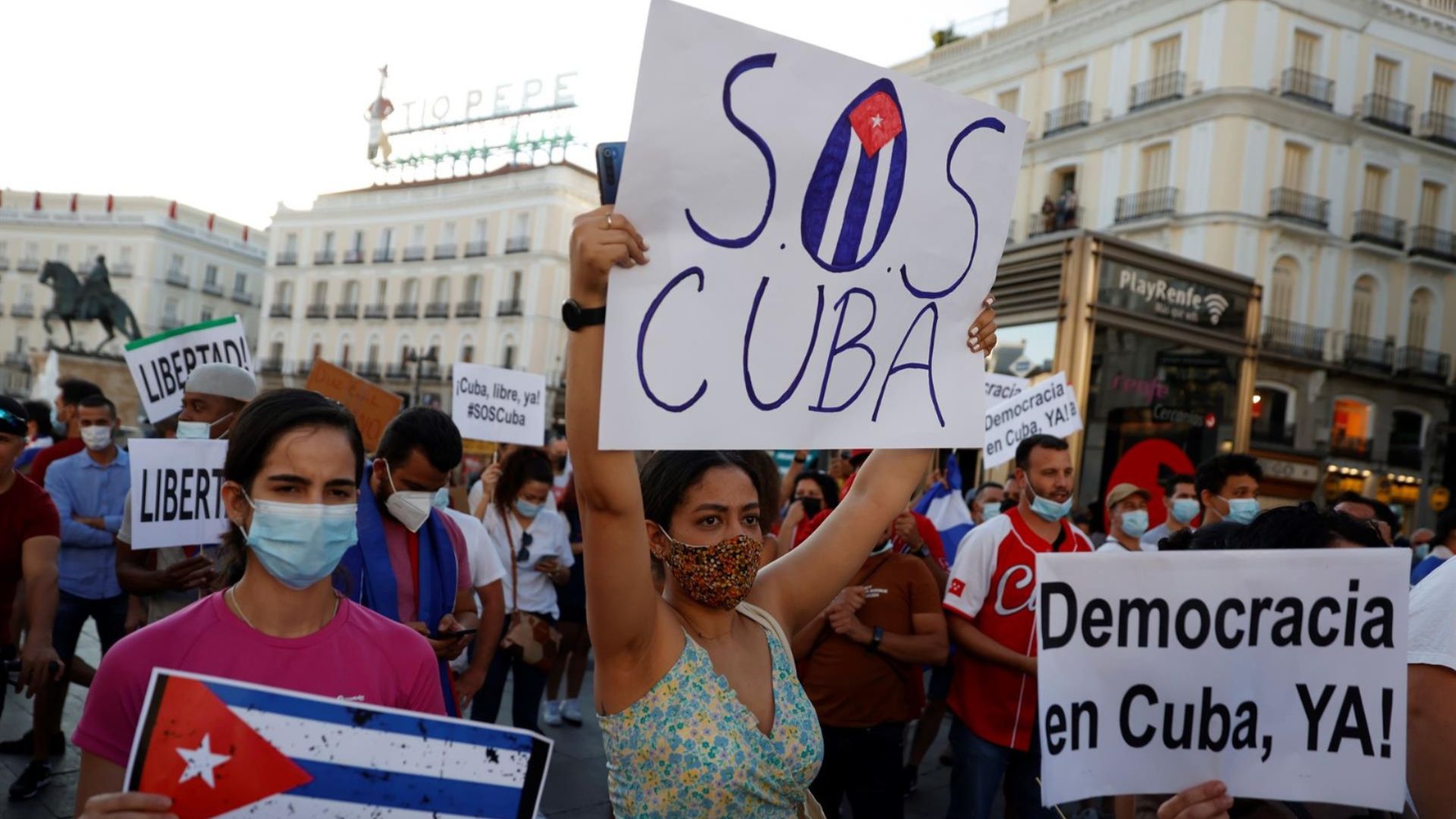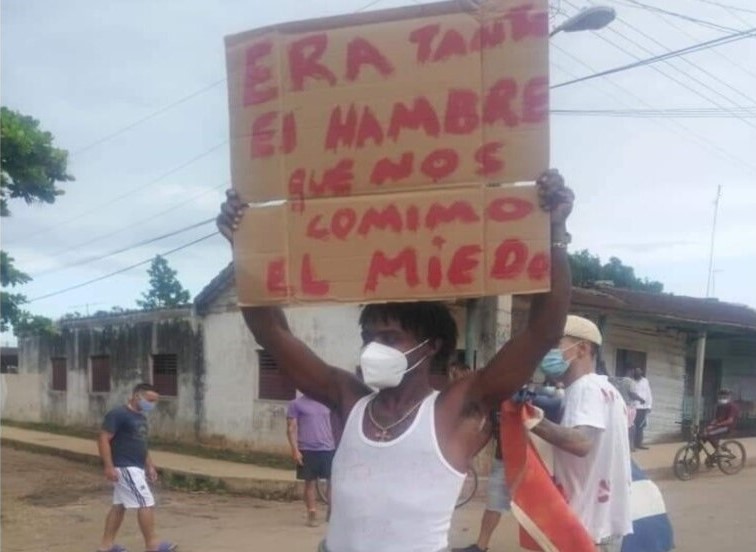
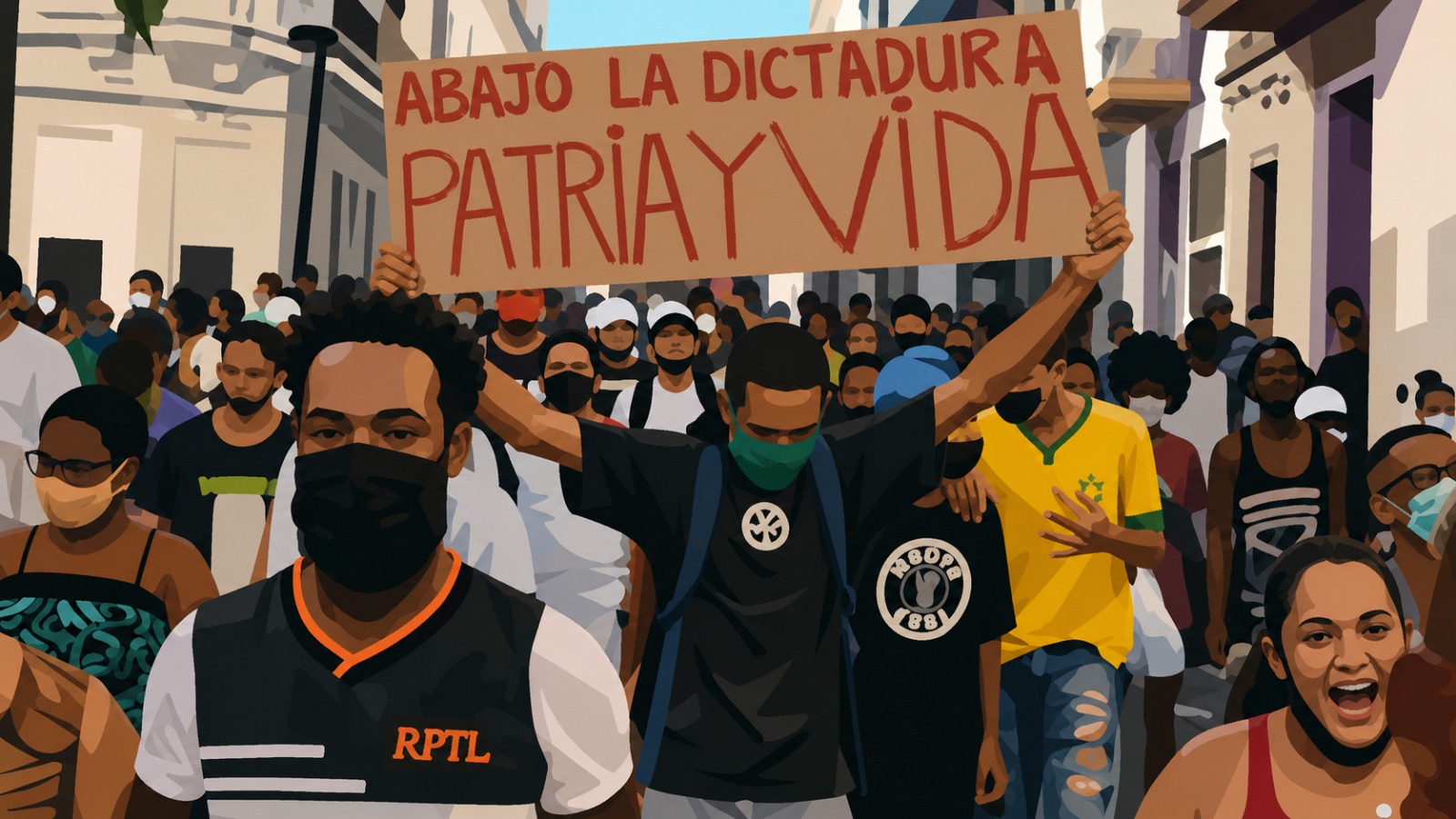
July 11 marks five years since the historic anti-government protests that swept across Cuba in 2021, when thousands of Cubans spontaneously took to the streets in every province to demand freedom, an end to the communist dictatorship, and better living conditions.
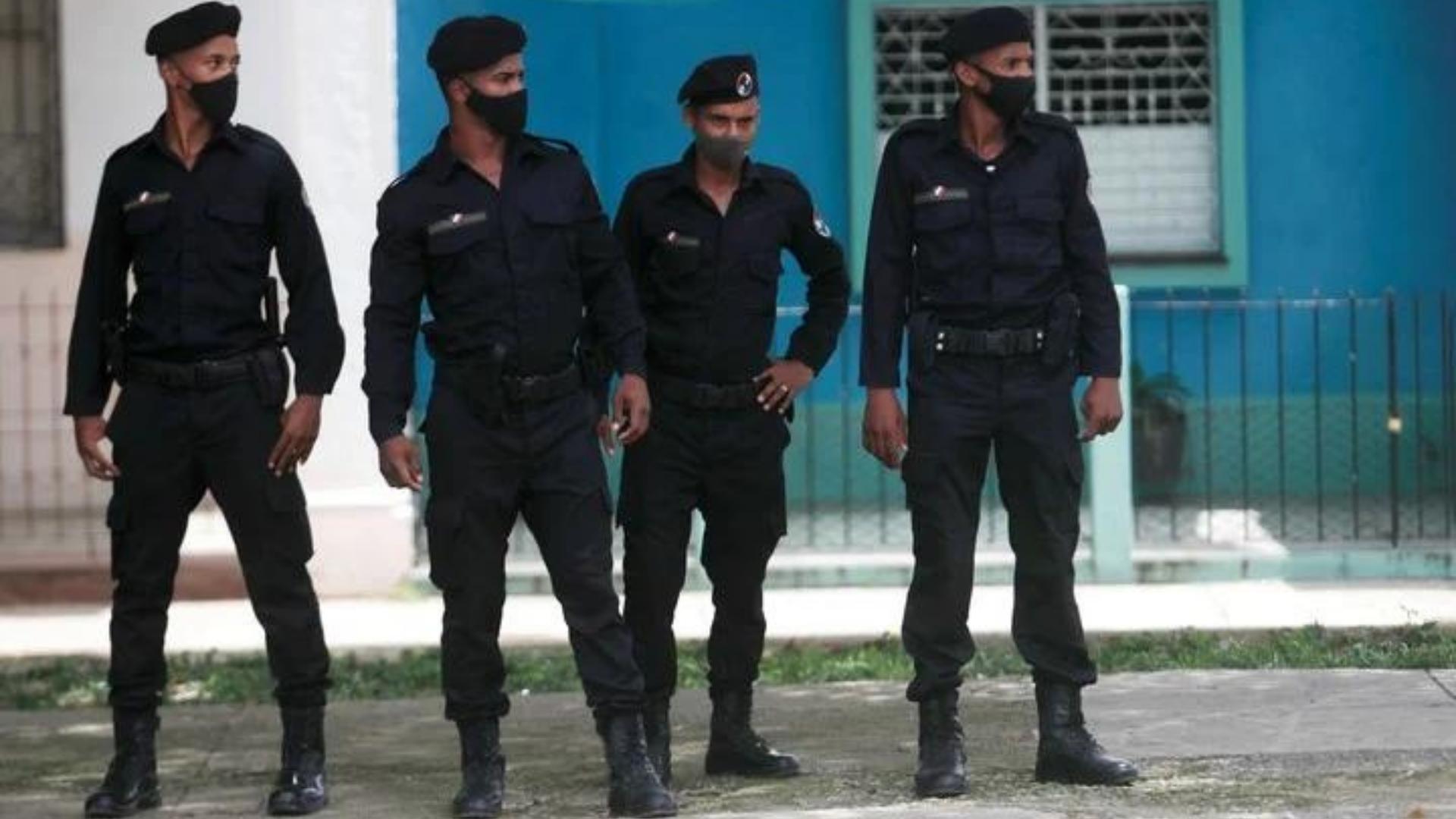
The Cuban regime responded with one of the most severe crackdowns in its recent history. Hundreds of demonstrators were arrested and sentenced to lengthy prison terms, while 36-year-old Diubis Laurencio Tejeda was fatally shot by security forces during the protests in Havana.
Five years later, many of those who participated in the demonstrations, relatives of political prisoners, and opposition leaders agree that the conditions that drove the nationwide uprising have not only persisted but have deteriorated further.
Alexander Díaz, a former political prisoner arrested after the July 11 protests, told ADN Cuba that ordinary Cubans continue to endure a deep humanitarian and economic crisis.
"Cubans are facing tremendous hardship. We have no electricity, no water, no food," he said.
Díaz also called for "freedom for my brothers who remain imprisoned for July 11" and wished "prosperity for the Cuban people, urging them not to lose hope of one day being free—that is the dream of so many."
Political activist and former prisoner Ángel Delgado echoed those concerns, saying the government's repression has continued unabated.
"From that day until today, more than a thousand political prisoners remain in the dungeons of the Cuban regime," he said.
Delgado argued that conditions on the island "have not improved at all; on the contrary, they have become even worse," describing a population that has grown poorer while "the communist leadership becomes richer every day." He added that the current situation could spark new demonstrations, emphasizing that "protesting is not a crime—it is a right."
For Guillermo Fariñas, coordinator of the United Anti-Totalitarian Front (FANTU), the anniversary is also a reminder that Cubans themselves must continue resisting inside the island.
"We cannot sit and wait for someone from abroad to solve our country's problems," he said.
Fariñas argued that resistance can take many forms, "from openly criticizing the Castro dictatorship while standing in the endless daily food lines, to blocking streets in protest over shortages and the rising cost of living." In his view, "change in Cuba will depend on those of us inside the country," adding that "no one is going to hand us our freedom."
The human cost of the crackdown remains deeply felt by the families of those still behind bars.
Emilio Román, whose sons Emiyoslán, Mackyani, and Yosney Román Rodríguez were imprisoned following the July 11 protests, described the past five years as a period of "pain, suffering, despair, and anguish."
"Political prisoners are living without even the most basic conditions. They are going hungry and enduring countless hardships because of this dictatorship," he said.
Román added that July 11 "is a day when the pain is shared by thousands of Cubans who want change for Cuba," once again calling for the release of all political prisoners.
Marta Perdomo, the mother of brothers Nadir and Jorge Martín Perdomo, who were also imprisoned after the protests, said that despite her family's suffering, she still views July 11 as a historic moment.
"July 11 was a glorious day. I am incredibly proud of my two sons," she said.
Perdomo lamented that both remain imprisoned, calling them "hostages of this dictatorship." She added that "after July 11, there was a before and an after in Cuba," predicting that the date "will forever remain part of the nation's history."
Opposition leader Manuel Cuesta Morúa believes the protests marked a turning point in the relationship between Cuban society and the ruling regime.
"Five years ago, almost the entire country rose up," he recalled.
According to Cuesta Morúa, Cuba had never before experienced protests of such scale or geographic reach. In his view, July 11 allowed Cuban society to realize "that it was separate from the state and the government." Although democracy has yet to be achieved, he argued that "Cuba's history changed" because the country reached the point "where societies begin to rise up."
Orlando Gutiérrez-Boronat, secretary-general of the Cuban Resistance Assembly (ARC), offered a similar assessment.
"July 11 was the day the resistance took to the streets," he said. "It marked the beginning of a new stage in Cuba's struggle for liberation—one that is irreversible."
José Díaz Silva, president of the Movement of Opponents for a New Republic (MONR), said the nationwide uprising sent a clear message to both the Cuban government and the international community.
"Five years ago, the Cuban people showed the world—and the regime—that they no longer accepted it. We have rights, and we will secure them one way or another," he said.
Mario Alberto Hernández, MONR's vice president inside Cuba, urged citizens to continue applying civic pressure against the government.
"We have to return to the streets to prevent this political system from continuing to rule by force. We must lead by example, fight for our freedom, and that freedom must be won in the streets—for Cuba and for its political prisoners," he told ADN Cuba.
As the fifth anniversary is commemorated, Díaz Silva also announced that Cuban exile communities have organized demonstrations this Saturday to honor the July 11 protests and demand the release of all political prisoners. Rallies are expected to take place in cities including Miami and Madrid.