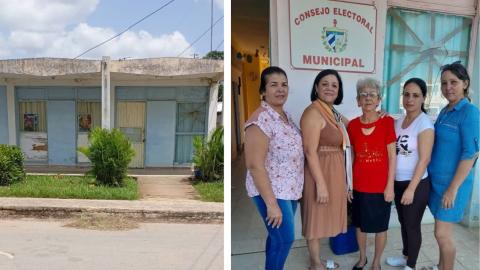
For nearly two years, José Carlos Pérez Acanda worked behind a computer at the Municipal Electoral Council (CEM) in Mantua, Pinar del Río. As an IT specialist, his job was to consolidate information arriving from electoral districts and transmit it to the provincial level through the Electoral Council’s official system. That technical position eventually led him to question how Cuba’s electoral system actually worked--a decision that cost him his job, left him destitute, and led State Security agents to threaten his family.
“I liked things to be done correctly. When they started making up participation figures and changing the opinions expressed by citizens, I began to reject everything I was seeing,” he recalled in a telephone interview with ADN Cuba.
His testimony describes a mechanism that, he maintains, extended far beyond the act of voting itself: candidate selection, the processing of official records, the consolidation of statistics, and the absence of independent oversight were all part of a system in which the Communist Party and State Security exercised constant influence.
A System Where Everything First Went Through a Spreadsheet
Pérez Acanda operated several programs hosted on a state intranet — one of them XISCOP, based on open-source software — and initially entered the data into Excel.
He says the manipulation of information occurred at several stages before the data reached the national system. Each district meeting or voting process generated an official record, a draft of which was prepared that same night. An official from the Communist Party or the Electoral Council was placed in charge of safeguarding it, and the following day, a vehicle belonging to the Council, a state enterprise, or the Party transported those responsible for the meeting to the Municipal Electoral Council with the document.
According to his testimony, the alterations began while the draft record was being prepared. As it was being written, officials received phone calls with instructions and changes were introduced into the information, either by increasing attendance figures or modifying the views citizens had expressed during the meeting.
Once at the Municipal Electoral Council, the figures and content — already altered — were entered into the computer system. Pérez Acanda says that on numerous occasions State Security agents supervised the process as he entered the information into the computer, after it had been modified by Electoral Council officials and before it was transmitted to the national database.
During the public consultation on the Family Code, held before the 2022 referendum, he says he witnessed systematic alterations to attendance records when meetings failed to reach the expected level of participation.
“If there were one hundred voters in an area and thirty or forty people attended, they would tell us to put down sixty-three. The important thing was to get above sixty percent,” he said.
Perez Acanda says he exposed the regime's efforts to fabricate voting reports, and even denounced the system as fraudulent in the presence of municipality leaders and a State Security officer, whom he accused of being complicit in the process.
Later that afternoon, the State Security officer came to his home to threaten his family, and when he returned to work he was forced to resign.
He also maintains that opinions expressed by citizens during the meetings were reformulated before being incorporated into official statistics, turning explicit rejection of the proposal into mere suggestions for changes to the text under consultation.
The public consultation on the Family Code, held between February and April 2022 and followed by a referendum in September of that year, was itself the subject of international questions regarding the guarantees surrounding the process. Human Rights Watch warned before the referendum that there were “serious reasons to doubt” whether the consultation fully reflected voters’ will, given the Cuban regime’s control over institutions, severe restrictions on freedom of expression, and the absence of independent mechanisms for electoral oversight.
Subsequently, within the framework of Cuba’s Universal Periodic Review, various United Nations mechanisms and actors continued to raise questions about the legitimacy of the process.
“Although on many occasions no one attended the meetings, I remember very few cases in which they were suspended because of a lack of participants. Even when attendance was nonexistent or minimal, both the number of attendees and the content of the meeting were fabricated. However, the greatest manipulation occurred in the most remote areas, where it was necessary to arrange a vehicle and fuel to pick up the person safeguarding the record and transport them to the Municipal Electoral Council.
“There, the president would always repeat the same phrase: ‘We can’t be the ones who look like fools.’ She would then coordinate with the secretary and with the State Security or Party official who had brought in the record to inflate attendance figures and add comments attributed to people who had never even been at the meeting.”
Candidate Selection Also Went Through Political Screening
One of the episodes that most affected the former official occurred, according to his account, was during a process to fill vacant seats for delegates to the People’s Power in Mantua.
A woman who owned a small food kiosk and had been nominated by her neighbors to appear on the ballot disappeared from the process before her candidacy was made official.
Pérez Acanda says he witnessed a meeting attended by municipal authorities, then-president of the Mantua People’s Power Noemís Sotuyo Ventura, Electoral Council director Alina García, Communist Party leaders, and State Security officials.
“They said that person could not be on that list and that they had to find a way to put someone from the Party or the Young Communist League there instead, because the kiosk owner was no good,” he recalled.
By the time the election was held, he says, the woman’s name no longer appeared among the candidates. Based on his experience, there was a period between nomination by residents and the official confirmation of candidacies during which proposed candidates could be politically vetted and people considered undesirable could be prevented from moving forward.
“Sometimes they pressured the candidate directly to withdraw their name; in other cases, they tried to repeat the nomination process or find some other way to remove them,” he said.
No Audits or Independent Oversight
Beyond individual cases, the former specialist argues that the system’s central problem was structural. He says the figures depended on manual processes that could easily be manipulated by the same officials responsible for safeguarding the records, who could also alter them before the final versions were prepared.
According to Pérez Acanda, the entire process lacked mechanisms for independent observation, allowing information to be changed without effective oversight. He adds that the physical forms were never subsequently audited and that there were no external controls to verify that the data transmitted matched the original documents.
“If someone changed a figure before importing it into the system, afterward that was what remained,” he told ADN Cuba.
He also recalls seeing boxes piled up inside the Electoral Council containing records from previous electoral processes, spanning different years and districts. When he asked whether those documents should be entered into the system so they could be preserved or cross-checked against the data reported in the national voter registry, he says he was told to leave them where they were because the figures had already been submitted and there was nothing left to verify.
For Pérez Acanda, the absence of independent audits constitutes one of the system’s principal weaknesses because it makes it impossible to detect potential irregularities, including duplicate voting. He says that during the Family Code referendum, people were allowed to vote outside their municipality of residence by presenting identification, but those records were not subsequently cross-checked against their original voter lists.
“Those records were never reviewed or entered into a computer. So there was no way of knowing whether a name appeared twice or whether someone had voted twice,” he said.
The pattern Perez Acanda describes has a precedent acknowledged by the electoral authority itself.
Following the February 2019 constitutional referendum, then-president of the National Electoral Commission Alina Balseiro reported that the preliminary voter registry, initially set at 9,298,277 voters, had been corrected to 8,705,723. The review eliminated 594,580 duplicate records involving people who had voted outside their area of residence, as well as 3,445 records corresponding to deceased individuals. Because the number of votes cast remained at 7,848,343, the official turnout increased from the initially announced 84.41 percent to 90.15 percent in the final results.
A Pattern Documented by Independent Organizations
Our investigative team attempted to independently verify the allegations made by the former official, who now resides in the United States. To that end, requests for comment were sent to the president of the Mantua Municipal Electoral Council and the Municipal Assembly of People’s Power. However, no response was received by the time of ADN's publication.
Still, the patterns described in Perez Acanda's testimony are consistent with allegations documented for years by organizations including Observadores de Derechos Electorales, the Cuban Commission for Electoral Defense, Ciudadanos Observadores de Procesos Electorales, Cubalex, and Justicia 11J, which have documented the lack of guarantees for independent electoral observation and the use of coercive mechanisms during Cuban electoral processes.
In a report submitted to the United Nations Working Group on Enforced or Involuntary Disappearances by Cubalex and Justicia 11J, the organizations maintain that electoral violence in Cuba takes place within a system in which the Communist Party exercises absolute control over state institutions.
According to the report, that violence is not limited to arbitrary detentions but also includes surveillance, restrictions on movement, censorship, selective internet shutdowns, harassment of independent observers and journalists, and mechanisms designed to prevent any autonomous oversight of the electoral process.
Those conclusions are consistent with incidents documented during the November 2022 municipal elections, one of many examples that could be cited on the island. During that election, Cubalex recorded at least 26 acts of repression across seven provinces, including house arrests, arbitrary detentions, threats against relatives of political prisoners, selective internet shutdowns, and the expulsion of citizens attempting to conduct independent electoral observation.
Rebuilding Democracy from the Ground Up
The allegations involving candidate manipulation, data processing, and the absence of independent oversight raise an inevitable question: How could a democratic electoral system be rebuilt after more than six decades of one-party rule and the concentration of power under a regime such as Castroism?
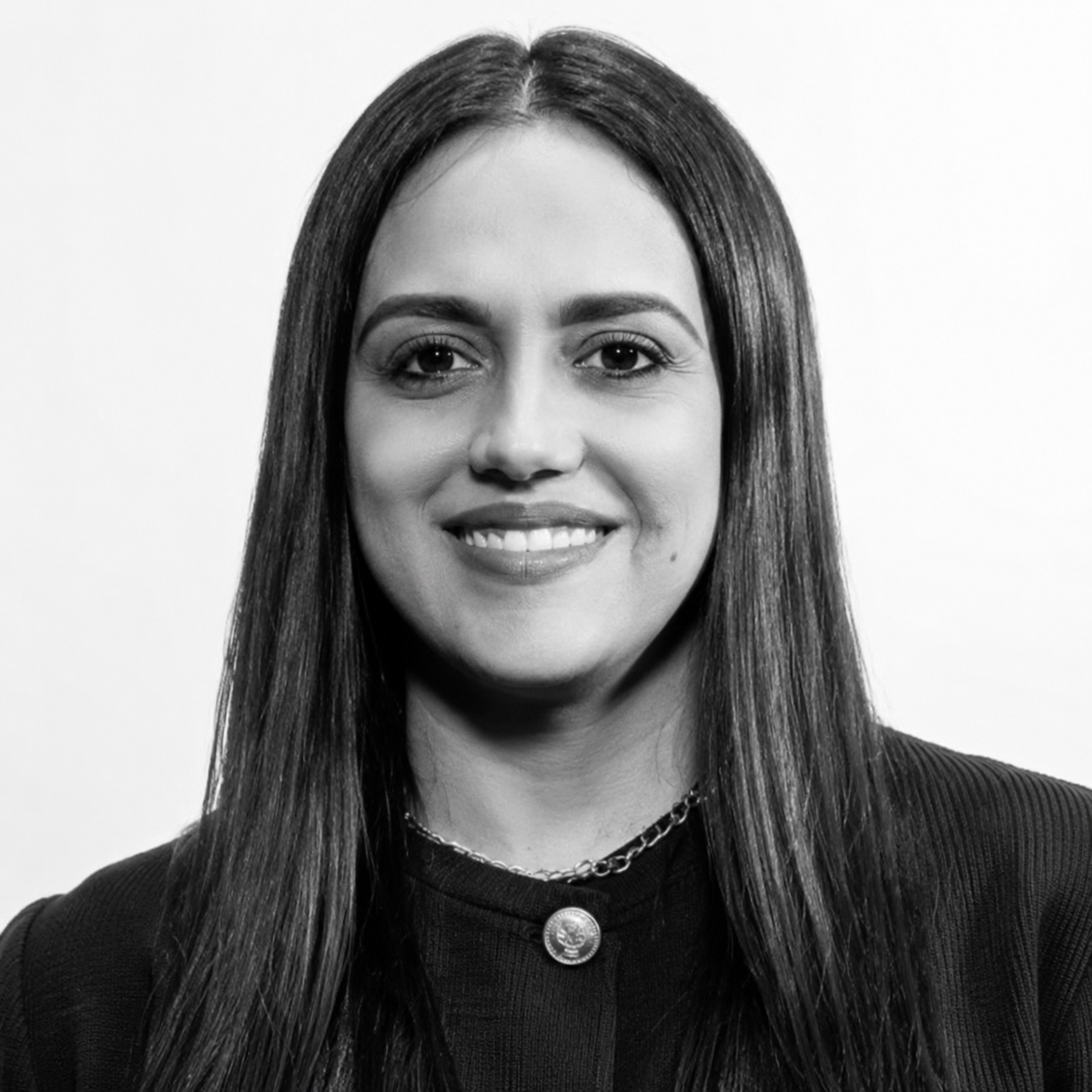
For Argentine lawyer and electoral law specialist Alejandro Tullio, an eventual Cuban transition — which he currently describes as a “unique laboratory” — should begin by strengthening local institutions before attempting to reorganize power at the national level.
In an interview with ADN Cuba, Tullio argues that the country would need a prolonged transition based on the election of municipal authorities and the gradual creation of political organizations capable of rebuilding democratic culture from the ground up.
“I would begin by electing municipal authorities. I would bet on freedom of choice at the local level. First, I would rebuild democracy from the bottom up, almost in the Athenian manner,” he explained.
In his view, attempting to establish a new central government immediately, without first rebuilding local institutions — and recognizing that the existing system is deeply dismantled — could reproduce new forms of arbitrary rule.
“Two things that today either do not exist or do not function have to be rebuilt: institutions and a free economy. Freedom carries enormous responsibility. It does not appear overnight; it, too, has to be rebuilt,” he concluded.
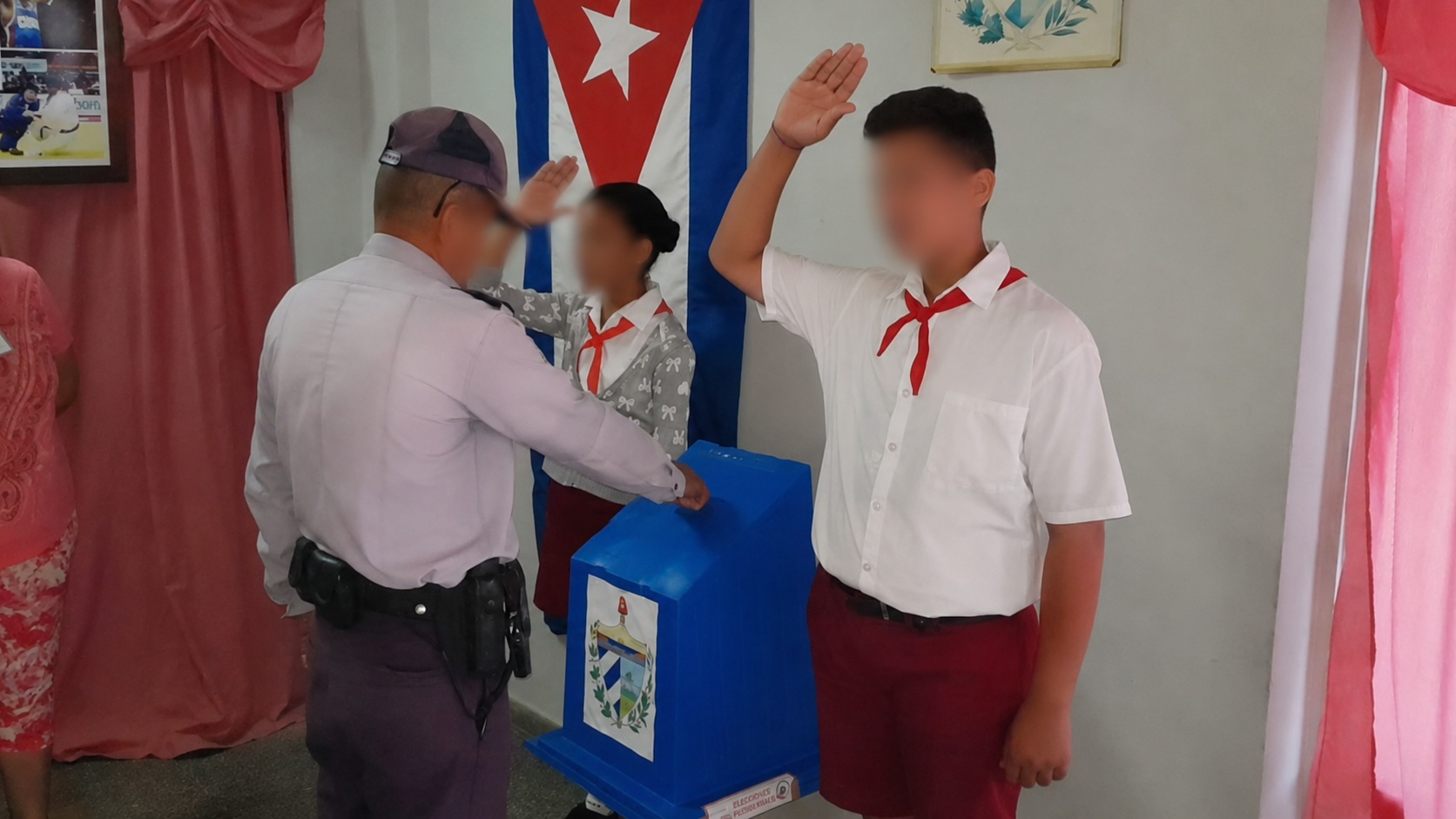
In more than six decades under the regime, Cuba has not held an election featuring competition between political parties. Since the institutionalization of the People’s Power system in 1976, all deputies to the National Assembly have been elected from single slates prepared by official commissions, without competitive electoral campaigns or independent observation.
At the same time, for decades Parliament has approved virtually unanimously the principal initiatives promoted by the country’s ruling leadership, while official electoral results have consistently reported high levels of voter turnout and support — a model that human rights organizations and experts consider incompatible with international standards for free and competitive elections.
The story of José Carlos Pérez Acanda is that of an official who decided to speak publicly about what he says took place behind the official figures. Considered alongside independent reports and expert analysis, his experience offers a window into a rarely visible aspect of Cuba’s troubled electoral system: the struggle for transparency may begin long before the first citizen casts a ballot.
Perez Acanda spent three months trying to find another job, but was turned down everywhere he went leaving him with no options to earn a living. After regime agents threatened him again, and it became apparent they were monitoring his private conversations with family and friends, he fled Cuba because he feared for his personal safety.