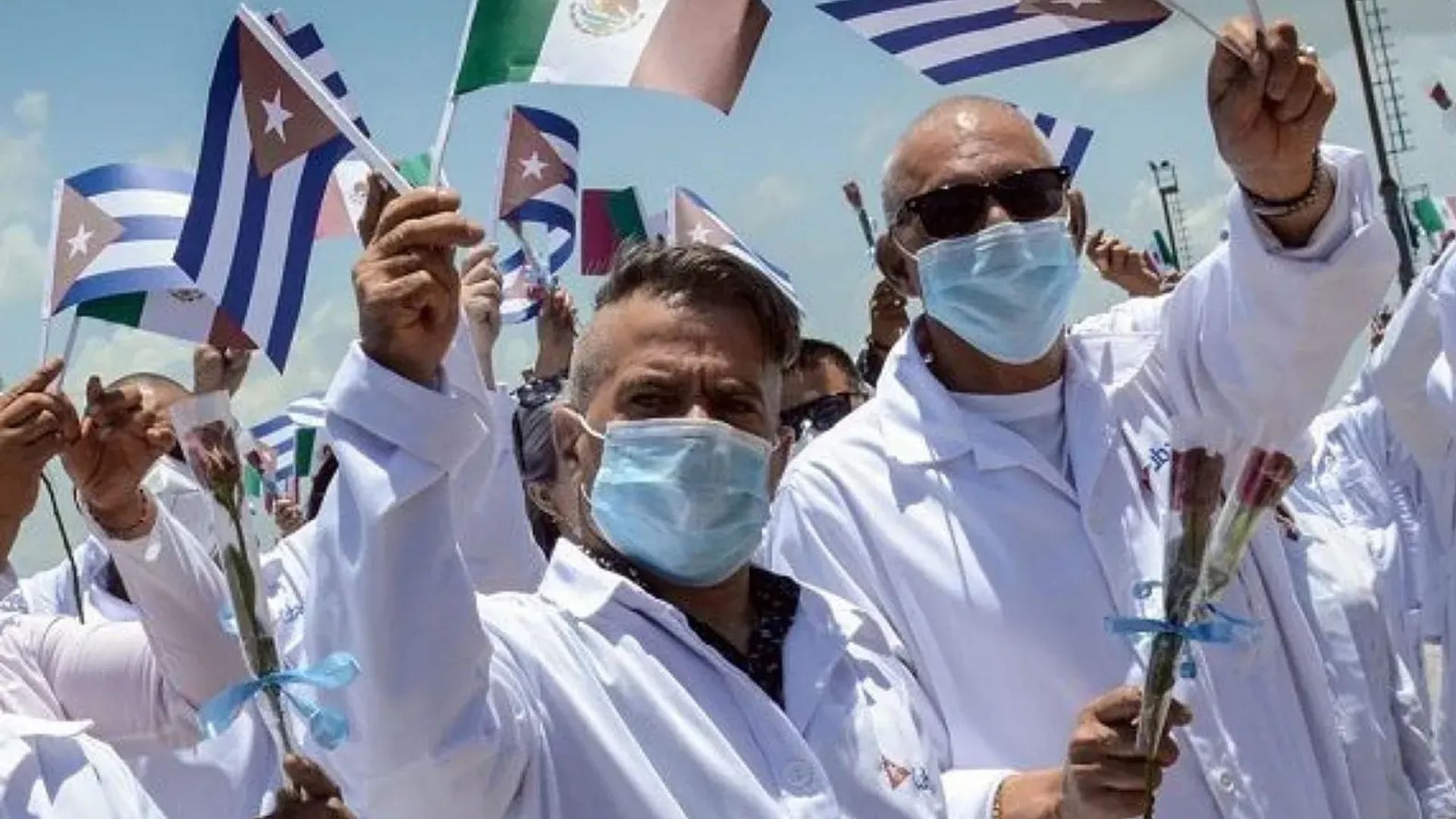
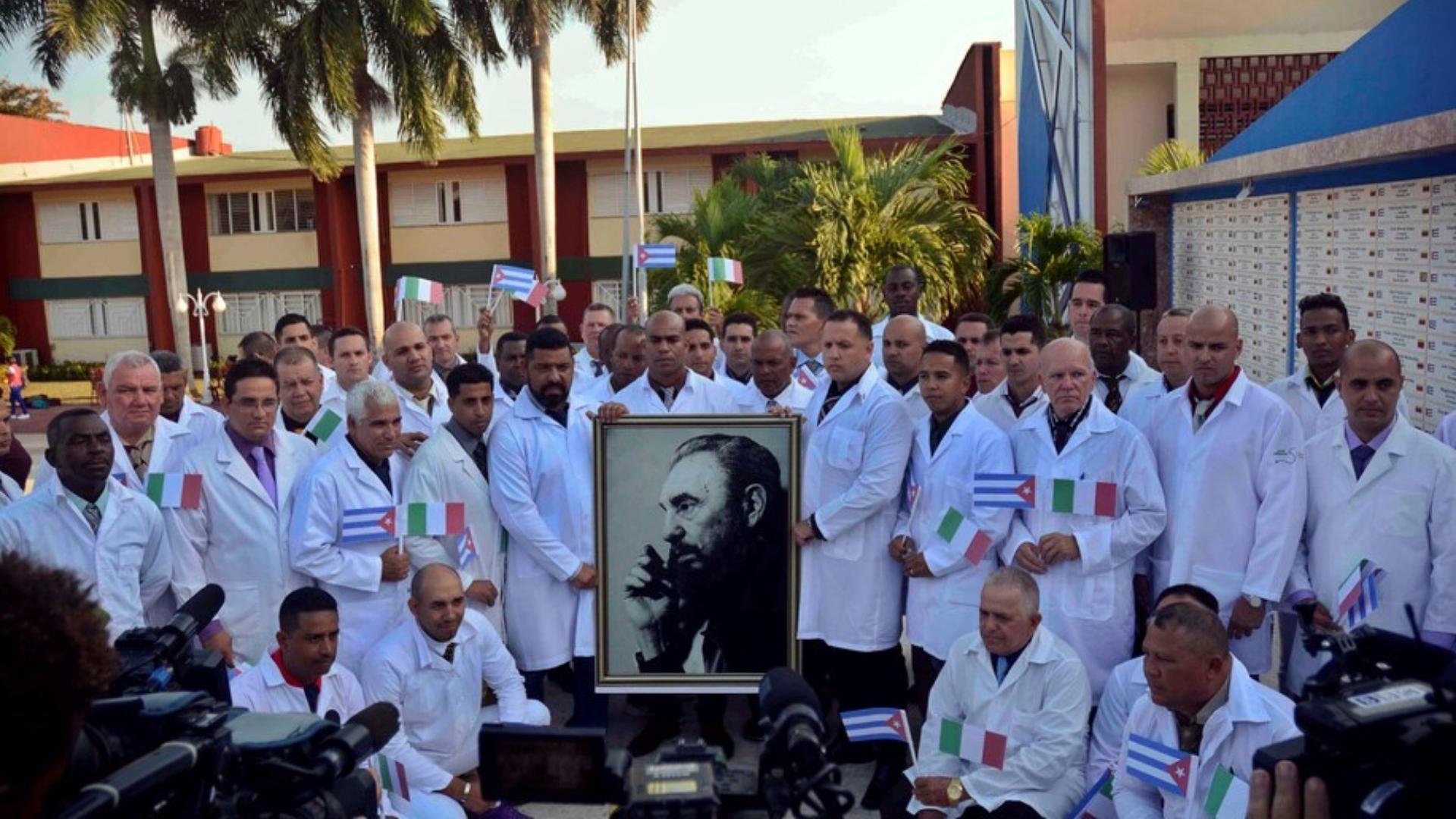
The Cuban regime confirmed this week that its medical brigades continue to be deployed across all 24 states of Venezuela, a revelation that raises questions about why thousands of Cuban healthcare professionals still work in that country more than two decades after the program began.
This confirmation came after earthquakes were reported in Venezuela on June 24. In a report published Thursday, the official newspaper Granma that Cuban authorities communicated with the leadership of the medical mission and confirmed that collaborators deployed in "the 24 states where we have personnel" were safe and that many immediately resumed emergency response efforts.
For María Werlau, executive director of Archivo Cuba, the report serves as a public confirmation of what her organization had already documented through interviews with Cuban doctors, Venezuelan professionals, and a network of collaborators within the country.
Archivo Cuba había confirmado por múltiples vías, y alertado al gobierno de EE.UU., que las brigadas médicas cubanas continúan operando en más de 20 estados de Venezuela. Ahora lo confirma el régimen cubano. Qué alivio saber que los médicos cubanos están a salvo tras los… pic.twitter.com/8OngTlroel
— Maria Werlau (@MariaWerlau) June 25, 2026
"Our investigation had already established that Cuban medical brigades never left Venezuela," Werlau told ADN Cuba this Friday. "Now it is the regime itself that publicly confirms they are still deployed throughout the country." Archivo Cuba had confirmed through multiple channels, and alerted the U.S. government, that Cuban medical brigades continue operating in over 20 states of Venezuela.
Werlau noted that many of these professionals occupy essential positions due to the shortage of doctors in Venezuela, caused by the mass emigration of healthcare personnel.
"We know that some —if not most — of these professionals fill indispensable roles, as the exodus of Venezuelan doctors has left a severe shortage of personnel and their eventual return will take time, if it happens at all. However, >this does not justify the continuation of a labor exploitation scheme," she asserted.
The researcher also questioned the nature of the agreement between both governments and the destination of the resources allocated to these missions.
"Why has the possibility of being directly hired by Venezuela not been offered to Cuban workers whose work remains necessary? Is the Venezuelan government still paying the Cuban dictatorship for these medical brigades? If so, it would be preserving one of the major historical sources of official income for the Cuban regime," she stated.
Cuban medical missions have faced repeated denunciations by human rights organizations and democratic governments, which maintain that the Cuban state imposes labor and mobility restrictions on professionals sent abroad and retains a significant portion of the income they generate.
In 2025, the United States announced it was expanding visa restrictions on officials of the Cuban regime linked to the exploitation of doctors and other professionals sent abroad.
A statement signed by Secretary of State Marco Rubio describes these so-called medical missions as 'forced labor.' For several years now, international organizations have denounced the exploitation of Cuban doctors. In late 2023, a report surfaced regarding the doctors from the island sent to Italy under an agreement between the communist regime and the president of the Calabria region.
In January 2024, the United Nations accused the states of Cuba, Spain, Italy, and Qatar, as well as the company MSC Cruises, of promoting the so-called Cuban missions for work abroad.
According to the report, revealed by Prisoners Defenders (PD), the accusation emphasizes the threats, harassment, and sexual violence suffered by female doctors, nurses, and other professionals at the hands of officials of the Cuban regime.
Cuban healthcare professionals are subjected to abusive labor conditions: their passports are confiscated upon arriving in destination countries, they receive minimal salaries, and are under strict surveillance.
Moreover, many are forced to provide information to the Cuban regime and to manipulate health statistics.
As of May 2024, the Cuban regime had 54 brigades with a total of over 22,600 professionals in various countries.