
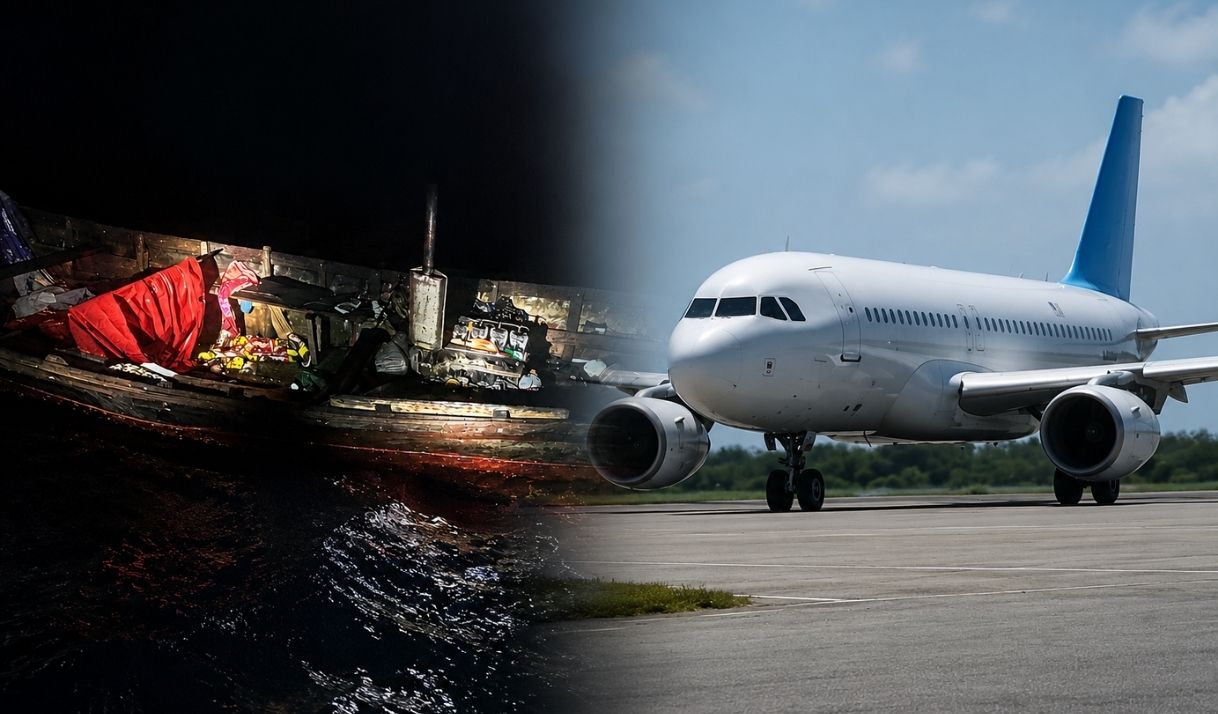
The United States deported 123 Cuban migrants on Thursday in two separate operations: a span>deportation flight with 96 people that landed in Havana and the maritime repatriation of 27 rafters rescued by the U.S. Coast Guard when their vessel was about to sink in the Yucatán Channel.
"The Ministry of the Interior (MININT) reported that the flight arriving from the United States reached José Martí International Airport with 96 irregular migrants, including men and 18 women.
Three of the returnees were detained for allegedly being linked to crimes committed before leaving the country, according to the official statement.
With this operation, the Cuban regime indicated that 740 people have been returned to the Island so far in 2026, through 25 repatriation operations carried out from various countries in the region.
Meanwhile, the U.S. Coast Guard (USCG) reported on Thursday the repatriation of another 27 Cuban rafters, who were rescued after being found in a troubled vessel in the Yucatán Channel.
According to the USCG report, the crew of the cutter Raymond Evans alerted the Key West Sector last Thursday about a vessel sailing without lights. Upon inspection, agents found that the boat was taking on water, lacked fuel and drinking water, and was at imminent risk of sinking.
The 27 migrants were rescued and initially taken to the cutter Raymond Evans, where they received the necessary processing. They were later transferred to the cutter Winslow Griesser, which executed their repatriation to Cuba.
The repatriations are part of the migration policy applied by Washington to discourage irregular sea departures and maintain the ongoing migration agreements with Havana.
Since the implementation of new migration restrictions and the strengthening of maritime surveillance operations, the U.S. Coast Guard has reiterated that migrants intercepted at sea, except for humanitarian exceptions, are returned to their countries of origin.
U.S. authorities also insist that attempting to reach by sea in improvised vessels poses a high risk to life, especially during hurricane season, due to changing sea conditions and the precariousness of the vessels used by many Cuban migrants.
Luis Garcia, lieutenant commander and liaison officer of the U.S. Coast Guard with Cuba, added that “attempting illegal migration by sea aboard overloaded and unsuitable vessels is extremely dangerous and unnecessarily puts lives at risk.”
The first deportation flight from the U.S. this year strong>arrived in Havana last February, with 170 migrants.
According to the Immigration and Customs Enforcement (ICE), several of them had criminal records including murder, kidnapping, rape, drug trafficking, and other serious offenses.
These deportation flights are part of the migration agreements between Washington and Havana. They were resumed during the previous Biden Administration, and President Donald Trump has maintained them.
🚨A #USCG Cutter Winslow Griesser crew repatriated 27 Cuban aliens, Mon., to Cuba following an interdiction in the Yucatán Channel. @OVS_Southeast partners continue to deter unlawful maritime migration & protect lives at sea.
Read More 🔗: https://t.co/PZOWNYoW77 pic.twitter.com/NyhkBne44R
— U.S. Coast Guard Southeast (@USCGSoutheast)
June 25, 2026