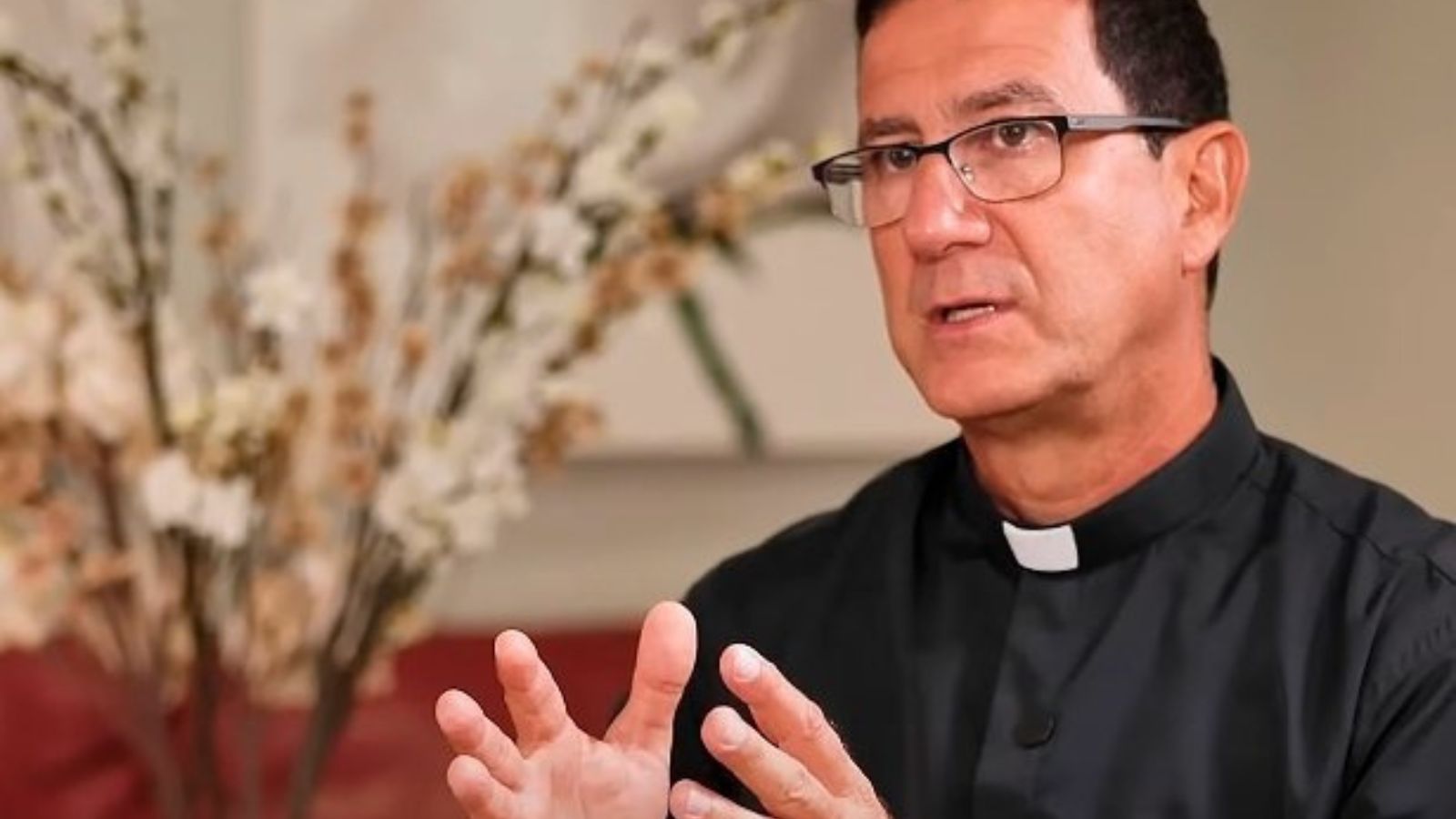
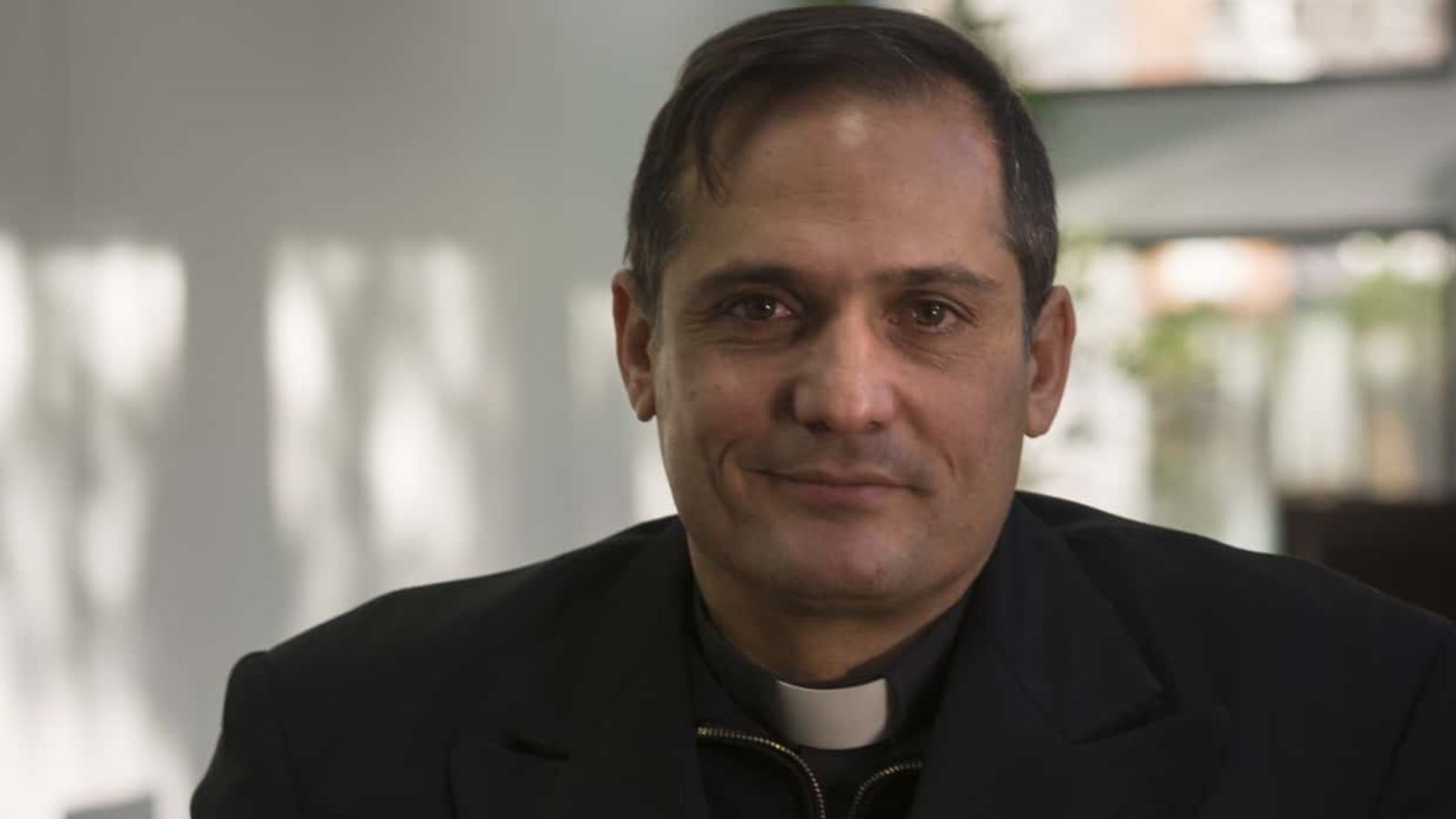
The Cuban regime on Friday prevented Catholic priest Castor José Álvarez Devesa from traveling to Miami, where he had been invited to attend the episcopal ordination of a Cuban American bishop, in the latest episode of harassment against one of the clergy members most openly critical of the dictatorship led by Miguel Díaz-Canel.
Speaking from Antonio Maceo International Airport in Santiago de Cuba, the priest said immigration officials informed him that he was barred from leaving the country as he prepared to board his flight. Álvarez said he had not been aware of any travel restriction and that officials neither explained the reason for the ban nor provided him with any official document supporting the decision.
“I cannot leave my country freely,” the priest said in a video shared on social media, describing the incident as another violation of his fundamental rights.
Father Castor, who serves in the Archdiocese of Camagüey, had planned to travel to Miami to attend the episcopal ordination of Monsignor Emilio Biosca Agüero, a Cuban American Capuchin Franciscan appointed by Pope Leo XIV as the new bishop of the Diocese of Venice in Florida.
The Cuban Observatory for Human Rights, known by its Spanish acronym OCDH, condemned the travel ban and warned that the regime uses restrictions on entering and leaving the country as “instruments of repression” against dissenters. The organization stressed that the case “is not isolated,” but rather part of a broader escalation of repression that has also targeted religious leaders.
An escalating campaign of harassment
The travel ban is not an isolated incident, but the latest chapter in a campaign of pressure against the priest, who is known for his close relationship with the families of political prisoners and for repeatedly denouncing the lack of freedom in Cuba.
On January 23, Father Castor was summoned and questioned for several hours by State Security officers alongside Father Alberto Reyes, another priest from the Archdiocese of Camagüey and one of the clergy’s most outspoken critics of the regime. Both men were summoned while attending a spiritual retreat with other priests from the archdiocese.
Although authorities never publicly explained the reason for the interrogations, human rights organizations described them as another attempt to intimidate Catholic clergy members who maintain a critical stance toward the government.
The surveillance of Father Castor dates back to the anti-government protests of July 11, 2021, when police officers detained him and beat him with a baton as he tried to protect a teenager during the crackdown in Camagüey. Since then, the priest has repeatedly reported surveillance, threats and restrictions on his pastoral ministry.
Previously barred from visiting political prisoners
The latest travel restriction also follows another repressive measure reported by ADN Cuba in 2025, when authorities prevented Father Castor from traveling to Las Tunas province to visit and provide spiritual assistance to several political prisoners held there.
On that occasion, State Security agents blocked his trip and prevented him from carrying out one of the essential duties of his ministry: offering spiritual support to people imprisoned for political reasons.
The priest said at the time that authorities were seeking to prevent any expression of solidarity with prisoners of conscience and their families.
A troublesome voice for the regime
Castor Álvarez has become one of the most prominent members of the Cuban clergy to publicly challenge government repression, demand the release of political prisoners and call for greater freedoms for civil society.
In homilies, social media posts and interviews with independent media outlets, the priest has repeatedly argued that genuine national reconciliation cannot take place while arbitrary detentions, political persecution and the denial of fundamental rights continue.
In recent years, national and international organizations have warned of increasing harassment against priests and religious leaders who support victims of repression or publicly criticize conditions in the country.
The travel ban imposed on Father Castor Álvarez on Friday therefore adds to a broader pattern of restrictions, interrogations, surveillance and interference with his pastoral work, underscoring the escalating state persecution of one of the Cuban regime’s most outspoken clerical critics.