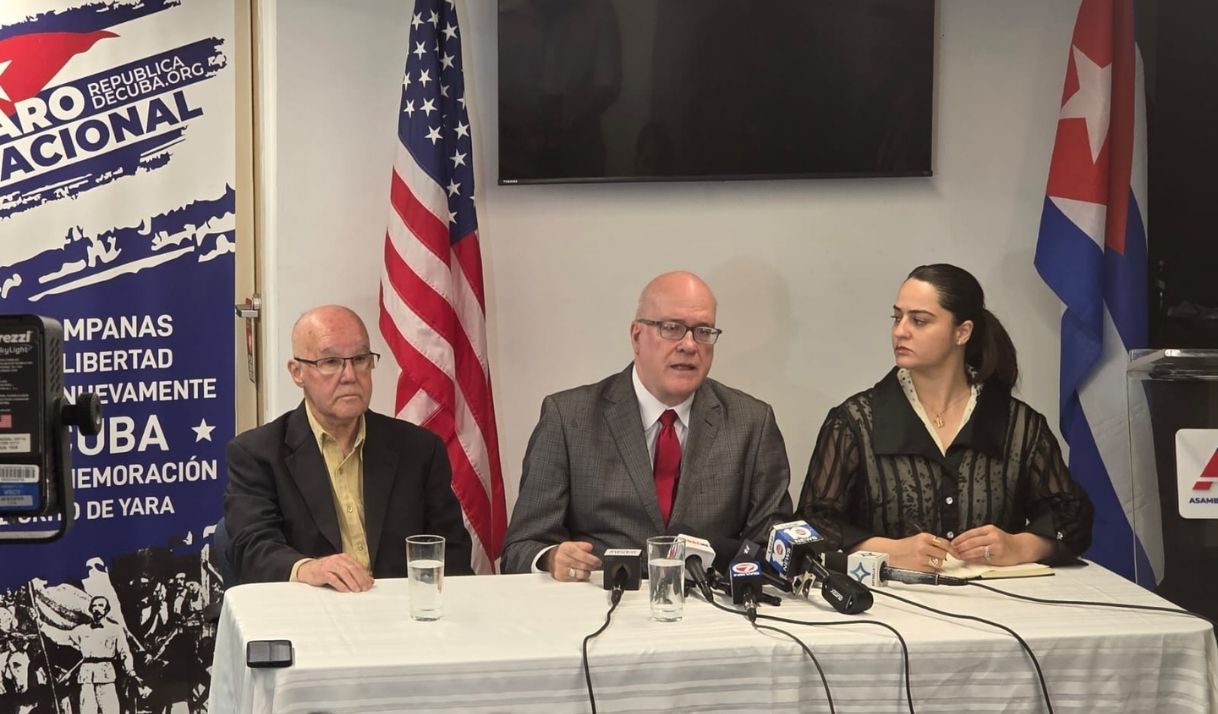
The Assembly of the Cuban Resistance (ARC) — a coalition of Cuban exile organizations that advocates for democratic change on the island — denounced on Friday during a press conference that the Cuban regime has no intention of implementing real reforms, despite ongoing conversations with the United States government.
“We will not allow this regime to delay change. The only real change is political change,” said Orlando Gutiérrez Boronat, secretary general of the ARC.
“What Díaz-Canel essentially said today is that they are engaging in conversations — in negotiations — with Washington without any intention of making political changes. We see a regime today that is on the verge of defeat but is trying to buy time in order to stay in power,” Gutiérrez Boronat added.
The remarks come after Cuban dictator Miguel Díaz‑Canel publicly confirmed that Havana is engaged in high-level talks with the United States and indicated that the government is considering opening limited “spaces for participation” in the island’s economy for members of the Cuban exile community.
ARC representatives warned that such proposals could be used by the government as a strategy to attract foreign capital without undertaking structural political reforms, including the legalization of opposition parties, the release of political prisoners, and the holding of free elections.
“The regime is not going to change politically. The country is collapsing, but they are not going to give up power. What they are doing is buying time to strengthen repression through unions and political organizations in response to the recent growth of protests in Cuba,” Gutiérrez Boronat added.
In a statement sent to ADN Cuba, the ARC also expressed support for the Cuba Liberation Agreement, a political roadmap signed on March 2 by several Cuban pro-democracy organizations.
According to the coalition, the agreement outlines a framework for democratic transition on the island.
“This agreement offers a concrete path toward ending the dictatorship and establishing a transitional government that would lead to free, pluralistic, and internationally supervised elections,” the statement concluded.
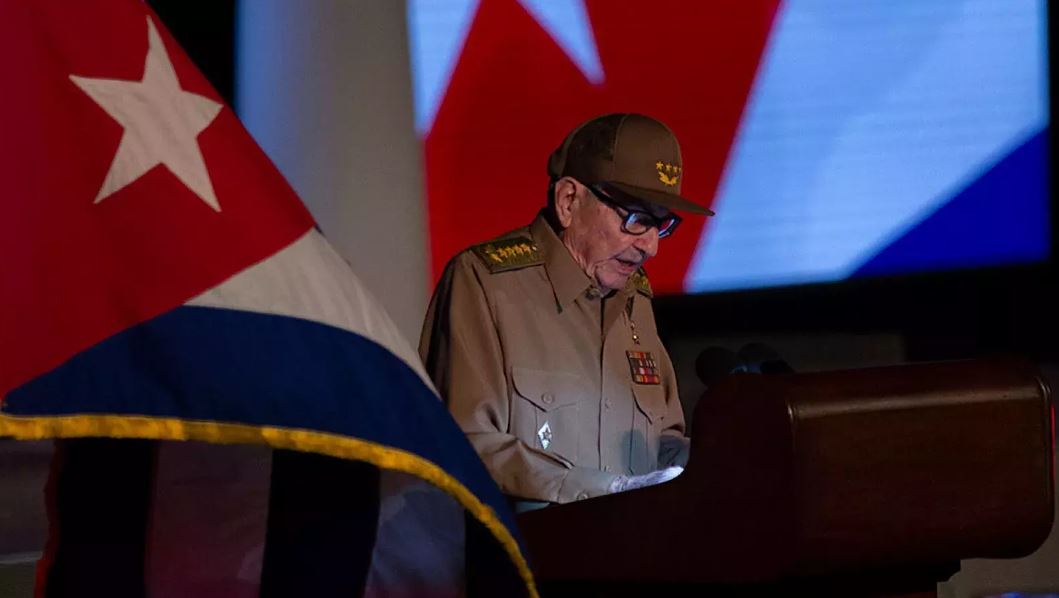
Meanwhile, Miguel Díaz-Canel confirmed on Friday that Havana is engaged in talks with Washington, describing the process as “very sensitive.”
“It must be remembered that it has not been nor is it the practice of the leadership of the Cuban Revolution to respond to speculative campaigns on such matters,” said Miguel Díaz-Canel. “This is a topic that is unfolding as part of a very sensitive process, conducted with seriousness and responsibility, because it affects bilateral relations between the two nations and requires enormous and arduous efforts to find solutions and create spaces for understanding that allow us to move forward and move away from confrontation.”
The remarks from Havana come after weeks of reports and international media speculation about alleged contacts between Cuban and U.S. officials.
On Thursday, the Cuban communist government also announced the release of 51 prisoners. However, authorities have not clarified whether those released include political prisoners.
Human rights groups and exile organizations consulted by ADN Cuba say the Cuban regime has long used prisoner releases as bargaining tools during diplomatic negotiations to avoid implementing structural political reforms. In previous episodes of engagement with foreign governments — including talks with the United States and the European Union — Havana has at times freed detainees or expelled political prisoners into exile while continuing to intensify repression inside the country.
Under U.S. law, however, the lifting of the embargo is tied to specific democratic reforms. The Helms–Burton Act, also known as the Cuban Liberty and Democratic Solidarity Act of 1996, states that sanctions on Cuba can only be fully lifted once a transitional government legalizes political parties, releases political prisoners, commits to free and fair elections, and begins addressing property claims stemming from the 1959 revolution.
Until those conditions are met, the law limits the ability of any U.S. administration to permanently remove the embargo. However, during the administration of Barack Obama, significant sanctions were eased through executive actions that expanded travel, remittances, and commercial engagement with Cuba, even though the Cuban government did not implement the political reforms outlined in the law.
“Today we want to support the policy of pressure and sanctions that this administration has carried out. We support President Donald Trump and Secretary of State Marco Rubio in the campaign of high-intensity pressure against this regime, because the only way there will be substantial change in Cuba is if there is political change in Cuba,” said Orlando Gutiérrez Boronat during the press conference.