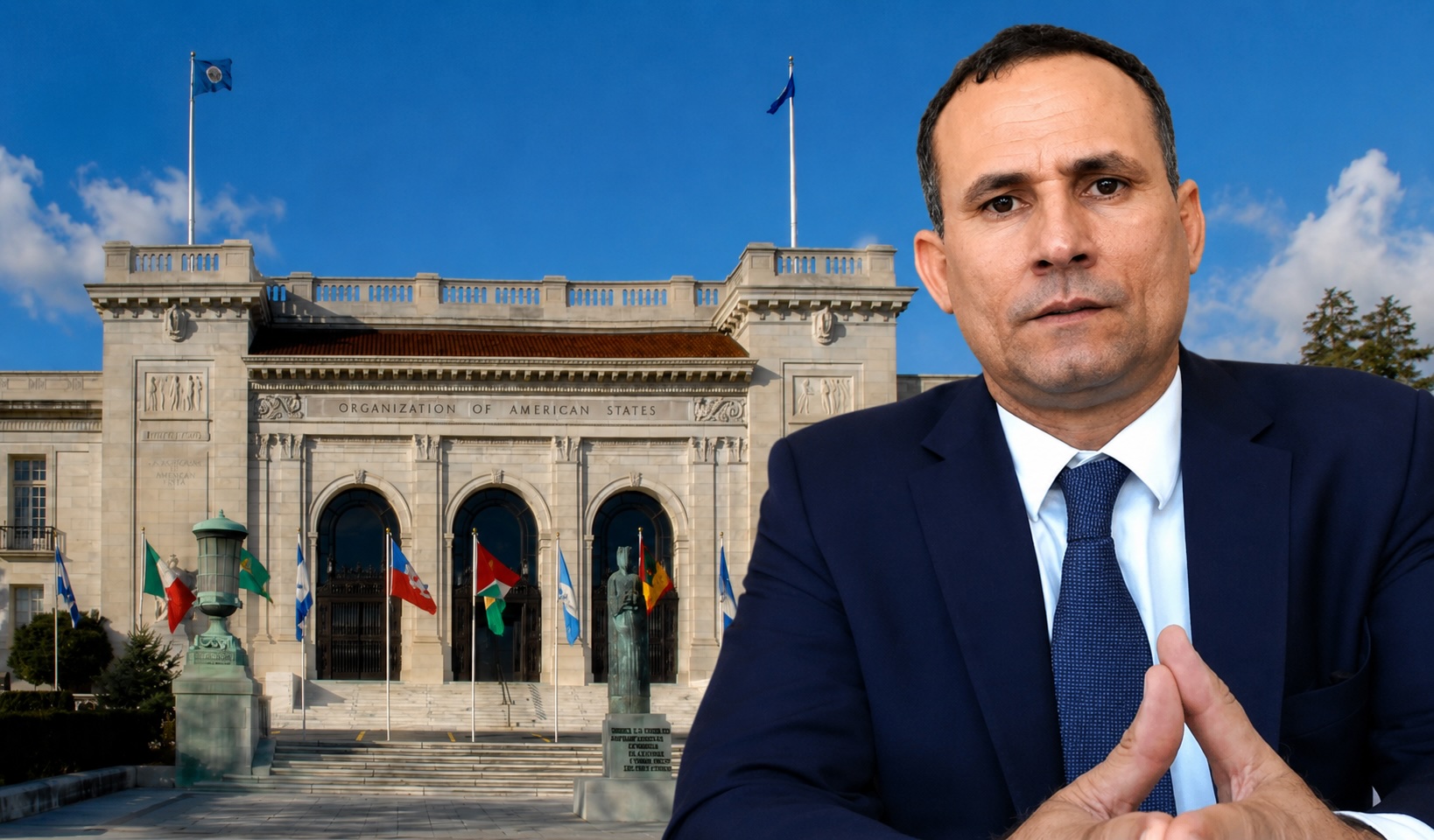
The statement issued Tuesday by the Secretary General of the Organization of American States (OAS) regarding Cuba, Nicaragua, and Venezuela is both welcome and necessary. In a hemisphere where ambiguity toward dictatorships has too often been the preferred response, it matters that the region’s leading political institution is calling for the restoration of democracy, respect for human rights, and the unconditional release of political prisoners.
It matters that the OAS has made clear that there should be no place in the Americas for political persecution or the imprisonment of individuals for their opinions or dissent. It also matters that, in a single statement, it identified the three regimes that today represent the most persistent and severe expressions of authoritarianism in the region: Cuba’s Castro-communist dictatorship, the Ortega-Murillo tyranny in Nicaragua, and the repressive system that has destroyed democracy in Venezuela.
But words, no matter how correct or necessary, are not enough. The reality facing the Cuban, Nicaraguan, and Venezuelan people demands that we move beyond statements and toward action.
It is important to remember that this pronouncement comes from the OAS Secretary General and does not yet constitute a formal resolution adopted by the organization's member states. That distinction is critical. A declaration expresses concern and establishes a moral position. A collective resolution can include clear condemnations, concrete demands, timelines, monitoring mechanisms, and political consequences for those who continue violating the fundamental rights of their citizens.
That is what the democracies of the hemisphere should now deliver.
Cuba remains under a one-party system that denies basic political freedoms. Nicaragua has persecuted, imprisoned, exiled, and stripped opponents, journalists, religious leaders, and civil society members of their rights. Venezuela must accelerate a genuine democratic transition, release all political prisoners, and restore the guarantees necessary for free, competitive, and transparent elections.
These are not internal matters that can be shielded behind claims of sovereignty. Human rights do not belong to governments, nor are they favors granted by tyrants. When a regime imprisons citizens for dissent, destroys judicial independence, shuts down a free press, and eliminates any possibility of political alternation, it should not benefit from the indifference of its neighbors.
That is why the OAS and its member states must adopt a firmer stance. They must unequivocally condemn repression in Cuba, Nicaragua, and Venezuela. They must demand the immediate and unconditional release of all political prisoners, an end to torture and arbitrary detention, the restoration of freedom of expression, association, religion, and the press, and the beginning of genuine democratic transitions.
The hemisphere must also embrace a coordinated policy of sanctions and pressure against those responsible for repression, corruption, and the preservation of these dictatorships. The goal is not to punish entire populations, but to hold accountable those who have stolen their rights and their future. Sanctions should target the regime elites, security officials, financial operators, and economic structures that keep these governments in power.
The United States should continue and strengthen that pressure. In Venezuela, it should use its influence to accelerate the democratic transition, demand the full release of political prisoners, and prevent partial concessions or elite bargains from becoming tools to prolong the rule of those who dismantled democracy. A genuine transition cannot be limited to cosmetic changes or the replacement of one set of names with another within the same authoritarian apparatus. It must return power to the Venezuelan people.
Other nations across the Americas should join the United States in that effort. Experience shows that dictatorships do not yield to accommodating rhetoric or unconditional dialogue. They yield when confronted with coordinated international pressure, political isolation of those responsible, targeted sanctions, and clear demands for democratization.
Today, that is the formula most likely to produce democratic change in Cuba, Nicaragua, and Venezuela: firm pressure on those responsible, direct support for victims, backing for independent civil society, and an unequivocal demand for freedom, human rights, and free elections.
The OAS statement should be welcomed. But it cannot be the final destination. It must be the beginning of a more determined hemispheric policy. The people of Cuba, Nicaragua, and Venezuela need more than words of solidarity. They need the democracies of the Americas to act with the urgency and resolve that decades of repression, poverty, and the absence of freedom demand.