From Tehran to Havana: Cuba’s role linking Islamic extremists and U.S. activists
Two days after this investigation was published in The Washington Times, the U.S. government sanctioned ICAP, the Cuban organization at the center of much of this reporting. ICAP claims ties to more than 1,600 solidarity groups worldwide and, in 2022, signed a cooperation agreement with the pro-Iranian coalition al-Tajammu.
Creado: June 23, 2026 12:24pm
Actualizado: June 23, 2026 5:30pm
Update (June 23, 2026): A version of this article was originally published in The Washington Times on June 2, 2026. Two days after its publication, the U.S. government sanctioned the Cuban Institute of Friendship with the Peoples (ICAP), one of the organizations examined in this investigation. Since then, Washington has also expanded sanctions against entities linked to the military conglomerate GAESA and designated Annalie Lilliam Rueda Cardero, a contributor to Resumen Latinoamericano—a media outlet discussed in this investigation for its ties to networks aligned with Iran and Hezbollah—and the wife of Alejandro Castro Espín, son of Raúl Castro.
Last year, one of the authors of this op-ed (Fragela) published a column in this newspaper detailing how Cuba connects pro-Iranian militant movements with Western Marxist activist groups.
That column focused on ICAP – Cuba’s Institute for the Friendship of Peoples – an organization associated with Cuban intelligence that orchestrates trips to the island for American activists and ‘solidarity’ groups that are protesting in the U.S. It reported that of the 2,000 groups ICAP has associated with, the list includes CodePink, the Party of Socialism and Liberation, Democratic Socialists of America and a pro-Iran coalition called al-Tajammu.
In 2022 ICAP and al-Tajammu drafted a “document for cooperation and integration.” According to Israel’s International Institute for Counter-Terrorism (ICT) al-Tajammu has links to Hezbollah and its board includes members of other U.S. designated foreign terrorist organizations (FTO) such as the Houthis, Palestinian Islamic Jihad, Popular Front for the Liberation of Palestine (PFLP).
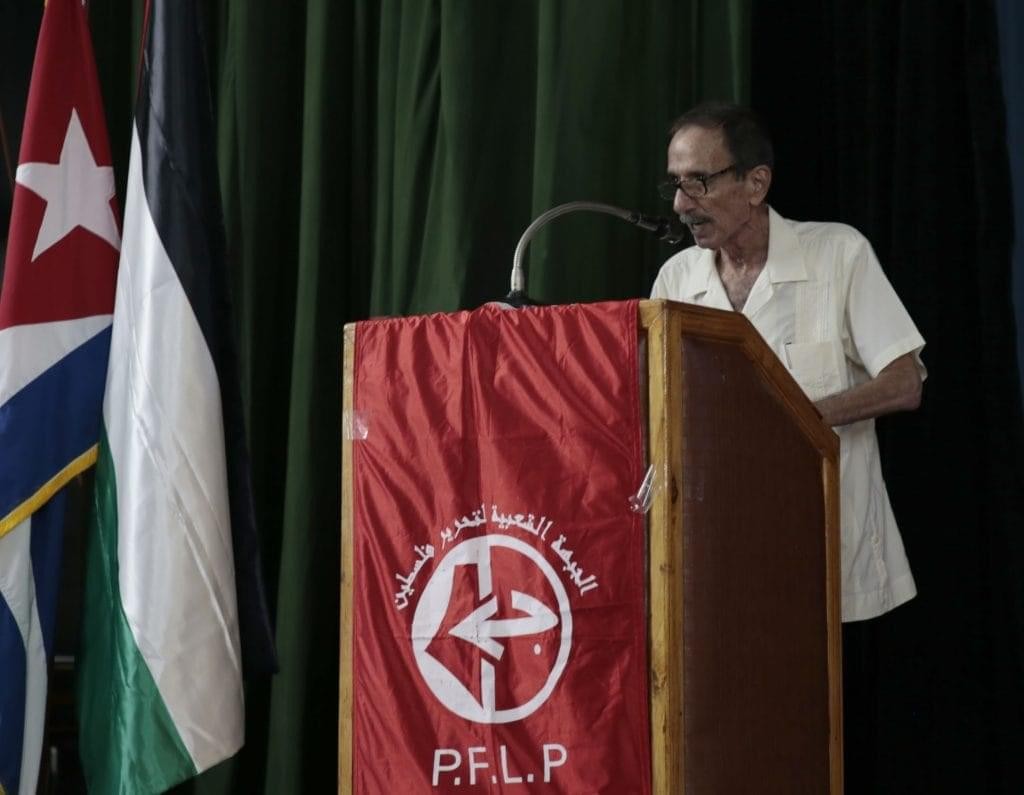
In 2017, a PFLP fighter, Musa Ahmed Jaber, arrived in Cuba and established the PFLP-Cuba branch, using the island to disseminate anti-Israel and anti-Western propaganda into the U.S.
One year later, a California nonprofit whose CFO, Paul Larudee, was identified by al-Tajammu as its North American coordinator registered a Fictitious Business Name – the International Committee for Peace, Justice and Dignity (ICPJD) – that public reports show was co-founded by a Havana-based PFLP member.
Mr. Larudee’s flagship nonprofit, the Association for Investment in Popular Action Committees, which forms the acronym AIPAC, (not to be confused with the pro-Israel lobbying group) has operated under many anti-Israel DBAs, according to Alameda County Controller records.
Two of those entities are the ICPJD and Resumen Latinoamericano, an online platform that amplifies pro-Cuba and anti-Israel narratives.
Dr. Michael Barak, an International Institute for Counter-Terrorism senior researcher told us that, “Resumen Latinoamericano operates and spreads the message of Iran, Hezbollah and pro-Iranian organizations such as al-Tajammu.” Our online research confirms that Resumen Latinoamericano stories were republished by Hezbollah’s media outlet, Al-Manar.
Dos de esas entidades son el Comité Internacional por la Paz, la Justicia y la Dignidad (ICPJD) y Resumen Latinoamericano, una plataforma digital que difunde y amplifica narrativas alineadas con el régimen cubano y causas antiisraelíes.
Resumen Latinoamericano operates through an international network with offices in Cuba and Argentina, a legal structure in California, and a separate legal entity registered in Spain's Basque Country. The wife of Alejandro Castro Espín, the former head of Cuba's intelligence services and son of Raúl Castro, has worked with the outlet for years.
Historical DNS records show that earlier versions of Resumen Latinoamericano were hosted on IP address 91.226.176.148, part of the Madrid-based Nodo50 network. Public RIPE registration records identify Santiago Botana as the administrative contact for that address block. Various reports have linked Botana to Euskadi Ta Askatasuna (ETA), the Basque separatist organization.
In 2019, the Spanish server was targeted in a joint Colombian-Spanish investigation that found members of the National Liberation Army (ELN) had used the infrastructure to host websites claiming responsibility for a car bombing at a police academy in Bogotá. The attack killed 21 cadets and wounded 68 others.
The same server infrastructure currently hosts the ICAP website (SiempreConCuba.com), along with numerous websites operated by activist organizations and political movements.
Dr. Michael Barak, an International Institute for Counter-Terrorism senior researcher told us that, “Resumen Latinoamericano operates and spreads the message of Iran, Hezbollah and pro-Iranian organizations such as al-Tajammu.” Our online research confirms that Resumen Latinoamericano stories were republished by Hezbollah’s media outlet, Al-Manar.
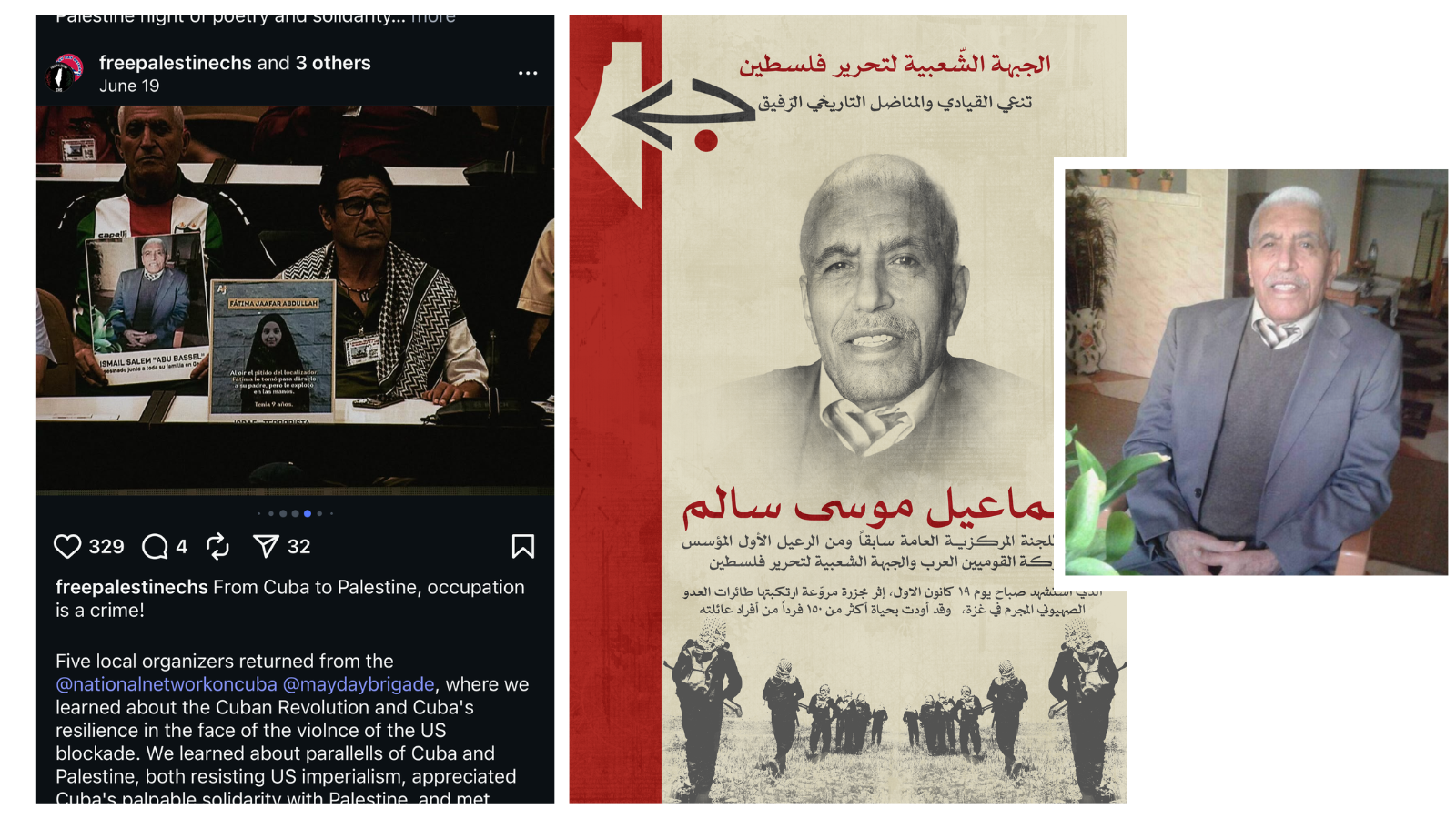
In 2021 Resumen Latinoamericano acknowledged that the ICPJD was co-founded by Bassel Ismail Salem, a Cuba based PFLP representative whose father, Ismail Musa Salem, was a PFLP founding member. Although AIPAC is registered in California, the digital footprint of its ICPJD alter ego appears in Cuban state-sponsored media, PFLP website, and the organization’s magazine, Al-Hadaf.
El Dr. Michael Barak, investigador sénior del Instituto Internacional para la Lucha contra el Terrorismo (ICT), afirmó que «Resumen Latinoamericano opera como una plataforma de difusión de los mensajes de Irán, Hezbolá y organizaciones proiraníes como al-Tajammu». Una investigación de ADN Cuba también constató que contenidos publicados por Resumen Latinoamericano fueron posteriormente reproducidos por Al-Manar, el medio de comunicación oficial de Hezbolá.
En 2021, Resumen Latinoamericano reconoció que el ICPJD fue cofundado por Bassel Ismail Salem, representante del FPLP radicado en Cuba, cuyo padre, Ismail Musa Salem, fue miembro fundador del FPLP. That same year, Paul Larudee and Bassel Ismail Salem appeared together at the International Symposium in Solidarity with Palestine, a virtual event promoted by Iran-aligned networks and amplified by Resumen Latinoamericano. The gathering brought together activists and representatives of left-wing organizations from across Latin America and Europe.
Although AIPAC is registered in California, the digital footprint of its ICPJD alter ego appears in Cuban state-sponsored media, PFLP website, and the organization’s magazine, Al-Hadaf. Since 2020, Mr. Larudee’s California non-profit has also organized “volunteer delegations” from the U.S. to Cuba and Venezuela.
These kinds of alliances are actually decades old. Many Western activists now orbiting al-Tajammu were also involved in the campaign for the release of the Wasp Network, a Cuban spy ring dismantled by the FBI in the 1990s.
This overlap was also disclosed by al-Tajammu board member Hassan Juni, who in 2022 said al-Tajammu activists campaigned for the Wasp Network, and that, upon their release joined NGOs and advocacy organizations. The authors also found that an earlier registration of Mr. Larudee’s ICPJD organized U.S. support to release Wasp agents.
Mr. Larudee’s network is also not a stranger to activists surrounding Neville Roy Singham, the billionaire under fire from Congress for his alleged ties to the Chinese Communist Party and contributions to leftist, anti-Israel groups such as CodePink and The People’s Forum.
Public filings show that Mr. Larudee’s AIPAC has made donations to the Justice and Education Fund, a non-profit linked to Mr. Singham.
These connections between Havana, the PFLP, al-Tajammu and U.S. leftist non-profits point to Cuba’s often underreported role as the connective tissue binding the “red-green alliance” between far-left movements and Islamist extremist networks.
“What makes this network so dangerous is the lack of scrutiny it receives in the West,” Dr. Barak explained.
In March 2024, Resumen Latinoamericano published photographs of a Cuba based Palestinian workshop featuring Mariela Castro, Raul Castro’s daughter, alongside PFLP representatives Bassel Ismail Salem, Dr. Watan Jamil Alabed as well as Justice and Education Fund director Manolo de los Santos who is also executive director of The People’s Forum — another Singham-funded organization.
That same month in Havana, Mr. de los Santos spoke at a regime-sponsored event attended by Salem, where he said the following in Spanish:
“I always want to go out to demonstrations with a certain red flag with a white circle and an arrow,” he said, seemingly describing an emblem associated with the PFLP. He then added: “I want to go out in the street with that flag, but I can’t. That is why we talk about the resistance.”
Cuban journalist Dario Alemán told the authors that circa 2014, while visiting a classmate at a Havana office operated by former Wasp agent Rene Gonzalez, he saw Mr. de los Santos arrive with Resumen Latinoamericano editor and ICPJD general coordinator, Graciela Ramirez.
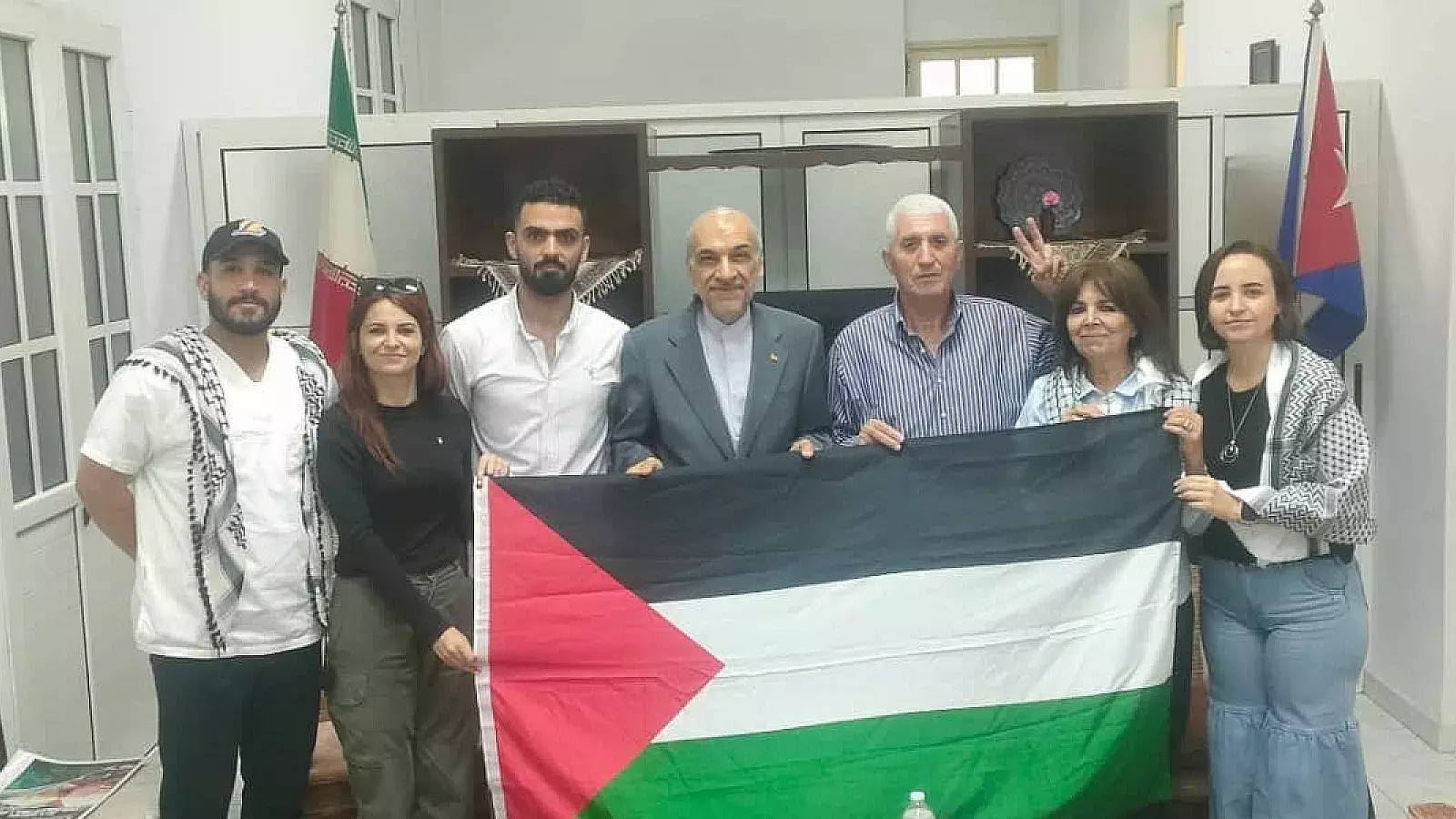
“He was introduced to me as a member of the International Committee,” Mr. Aleman said, referring to ICPJD’s earlier name. In 2024, photos surfaced showing Ms. Ramirez holding a Palestinian flag along Messrs. Salem and Alabed inside Havana’s Iranian Embassy.
Cuba has long been dismissed as a Cold War relic, but in 2023, Cuban officials and ICAP leaders celebrated their international influence in a report that boasted 106 pro-regime resolutions were passed in U.S. cities and that their solidarity movements mobilize White House demonstrations.
For years, the network linking Cuban intelligence-linked organizations, Islamist extremist groups, and Western activist movements has operated with little scrutiny. The last major public congressional discussion addressing Cuba’s role in facilitating Iran’s influence was 2015. Since then, these networks have only expanded their influence – a fact Washington should no longer ignore.
On June 4, 2026—just two days after this investigation was originally published in The Washington Times—the U.S. government sanctioned ICAP. Weeks later, Washington expanded sanctions against entities tied to GAESA and designated Annalie Lilliam Rueda Cardero, a contributor to Resumen Latinoamericano and the wife of Alejandro Castro Espín.
The expanding wave of sanctions against Havana in 2026 suggests that U.S. authorities are once again scrutinizing the international networks linked to the Cuban regime and the role they play in political influence operations beyond Cuba's borders.